Full Manuscript
Quantum Mechanics & Life
How the Universe Becomes Conscious — The Book of AAtomI
How the Universe Becomes Conscious
— The Book of AAtomI
Quantum Mechanics and Life: How the Universe Becomes Conscious
— The Book of AAtomI
© 2026 Don Reed
All rights reserved.
This work represents the author’s personal reflections on faith, science, and eternal questions and does not claim to represent official doctrine of The Church of Jesus Christ of Latter-day Saints.
Contents
Chapter 1: Particles, Atoms, and the Mystery Before Matter
Chapter 2: Atomic Forces, Fields, and Coherence
Chapter 3: The Quantum Vacuum and Non-local Potential
Chapter 4: How Atoms Organize Matter and Non-living Forms
Chapter 5: From Elements to Cells — Life’s Atomic Blueprint
Chapter 6: How Life Uses Atoms for Growth, Repair, and Energy
Chapter 7: Living on the Quantum Scale — A Cellular Perspective
Chapter 8: Lifespan of Atoms vs. Lifespan of Living Systems
Chapter 9: What is Consciousness? Degrees and Properties
Chapter 10: Quantum Theories of Consciousness — Orch-OR, Decoherence, Panpsychism
Chapter 11: Thought, Creativity, and Intelligence in Matter
Chapter 12: The Eternal Nature of Intelligence in Latter-day Saint Thought
Chapter 13: Agency, Light, and the Path to Divine Likeness
Chapter 14: Spirit, Matter, and the Soul's Unity
Chapter 15: Spirit, Matter, and the Resurrection of the Eternal Body
Chapter 16: The Divine Design of the Universe
Chapter 17: Covenants, Eternal Identity, and the Path of Return
Chapter 18: The 'I Am' Within: Common-Sense Intelligence and Eternal Identity
Chapter 19: Exaltation and the Architecture of Divine Becoming
Chapter 20: Remembering Our Origin, Becoming Our Destiny
Chapter 21: Time, Eternity, and the Living Present
Title: Quantum Mechanics and Life: How the Universe Becomes Conscious
Foreword: A Gateway to God’s Intelligence
In an age when machines can speak and algorithms can simulate intelligence, it would be easy to imagine that Joseph Smith, had he lived today, might have used advanced tools to produce something like the Book of Mormon. But he didn’t. He didn’t have access to artificial intelligence. He had something greater—a gateway to God’s intelligence.
Joseph Smith was not working from knowledge passed down from universities, nor from tools built in laboratories. He received truth through revelation—the transmission of living knowledge through the power of the Holy Ghost. The Book of Mormon was not composed through creativity alone. It was translated by the gift and power of God.
Modern technology may approximate understanding. It may organize data, model thought, and assist creation. But divine revelation transmits something deeper: eternal truth. It speaks not only to the mind, but to the spirit. It reveals not only information, but identity. And that is what Joseph Smith accessed—not invention, but instruction; not simulation, but sanctification.
This book—crafted with the help of AI—stands not in competition with the scriptures, but in humble alignment with their truths. It is an exploration of eternal patterns, spiritual coherence, and divine remembrance. And it stands as a witness: that intelligence, no matter how refined by man, will always bow before the intelligence of God.
In the end, Joseph didn’t need a machine to teach eternal truth. He needed only one thing: a heart open to heaven, and a soul willing to listen.
That is what made him a prophet.
And that is what can still change the world.
Chapter 1: Particles, Atoms, and the Mystery Before Matter
Before living cells pulsed with energy or breathed with life, there was matter—arranged with precision and purpose. But what if even that matter was shaped by something more ancient? The journey of creation begins not only with particles and atoms, but with a mystery beneath them—perhaps a form of intelligence that existed before time, not in need of food or shelter, but simply of light.
We often think of particles—quarks, leptons, bosons—as the smallest units of the universe. But even these may not be the true foundation. What if every particle, every atom, is not only a building block, but a bearer of ancient purpose? A carrier of awareness—not thought as we know it, but a kind of obedience, a responsiveness to divine law.
Latter-day Saint teachings align with this mystery. The Prophet Joseph Smith declared, “There is no such thing as immaterial matter. All spirit is matter, but it is more fine or pure.” This points to a reality where spirit and matter are not opposites, but degrees of refinement. Spirit may be matter too pure to see. Matter may be spirit slowed into form.
This invites a question: could particles themselves carry not only energy, but divine design? Not conscious in the way we think—but patterned, responsive, eternal? Some traditions—even some interpretations of quantum physics—suggest that matter behaves differently when observed, when “known.” This implies not randomness, but relationship.
Perhaps intelligence itself is eternal, as Latter-day Saints believe. Not just the capacity to think, but the fundamental light of truth that existed before the world was. Intelligence, in this view, precedes spirit, precedes body. It is the original “I Am”—not invented, not assigned, but present from the beginning.
“So before life as we define it emerged, there may have been another kind of life—one that exists not in cells or organs, but in coherence with divine will. A kind of awareness woven into the smallest sparks of reality.
This is not mythology. It is not merely metaphor. It is a truth that aligns with both scripture and science: that the universe is not random. It is relational. It is governed. It is alive—not in biology, but in pattern, order, law, and light.
And you—made of atoms, built from particles—are part of that same pattern. You do not just contain intelligence. You are intelligence. Ancient, indestructible, and known.
This is where the journey begins.
. Chapter 2: Atomic Forces, Fields, and Coherence
Chapter 2: Atomic Forces, Fields, and Coherence
`
If the atom is the beginning of physical reality, then the forces within and around it are the hands of creation. The atom does not simply exist; it holds together because of a delicate balance of powers—forces that are invisible yet ever-present. These are the laws that govern everything from galaxies to your heartbeat.
There are four known fundamental forces: the strong nuclear, weak nuclear, electromagnetic, and gravitational. Each one plays a distinct and sacred role in the orchestra of existence.
The strong nuclear force is what holds the atomic nucleus together. It binds protons to neutrons with such intensity that overcoming it requires monumental energy. It is the force of unity, preventing the positively charged protons from repelling each other. Without this invisible bond, atoms would fly apart. In this force, we glimpse the necessity of cohesion in creation. Just as in spiritual unity—families sealed, priesthood power held together, covenants binding generations—the strong force whispers of divine order.
The weak nuclear force is subtler but just as vital. It governs radioactive decay and allows particles to transform from one type to another. Through it, atoms change form, release energy, and become part of new structures. This is the force of transformation—a spiritual echo of repentance and rebirth. As taught in 2 Corinthians 5:17, “If any man be in Christ, he is a new creature.” Even nature testifies of change.
The electromagnetic force is perhaps the most familiar. It governs attraction and repulsion between charged particles, holds electrons in their probability clouds around the nucleus, and powers everything from light to the chemical reactions in your body. It is the force of interaction, connection, and spark. In gospel terms, it is like the Spirit—it connects us to truth, binds us to one another, and empowers revelation. “The light of Christ… is the power by which it was made” (D&C 88:7–10).
And then there is gravity, the weakest yet most majestic. It shapes stars and galaxies, and holds planets in orbit. It also keeps your feet on the ground and your breath within your lungs. Gravity operates on all matter and energy; it is the force of order, of grounding, of continual return. Like the Lord’s mercy, it is unseen but inescapable. “Come unto me, all ye that labour and are heavy laden, and I will give you rest” (Matthew 11:28).
Together, these forces make the atom not merely a particle of matter, but a system of balance. In their interplay, atoms combine, and fields emerge. Every particle, according to quantum field theory, is not an isolated dot but a ripple in an underlying field that stretches across space and time.
These fields—whether of electromagnetism, the strong force, or the Higgs field—interact with one another in astonishing ways. Where they align or interfere, they produce structure and substance. And when they vibrate in harmony, they create quantum coherence—a kind of energetic alignment where particles behave not as separate, but as one.
Coherence is found in nature: in the photosynthesis of plants, the navigation of birds, and even in the functioning of your own brain. It is as though life has learned to tap into these deeper harmonies, sustaining order in a world that tends toward entropy. This same coherence may also be present in spiritual practice—when thought, feeling, and purpose are aligned. “Be one; and if ye are not one ye are not mine” (D&C 38:27).
It is not a stretch to imagine that prayer, intention, repentance, and faith may have quantum counterparts: reordering the soul’s internal structure in ways not yet seen by science. When you feel spiritually "aligned," perhaps your inner field is becoming coherent—your body, spirit, and mind resonating as one.
Atomic forces are not abstract—they are intimate. They do not only hold stars together; they hold you together. And in understanding them, we begin to understand something of the architecture of creation—a design that does not oppose spirit, but reveals it.
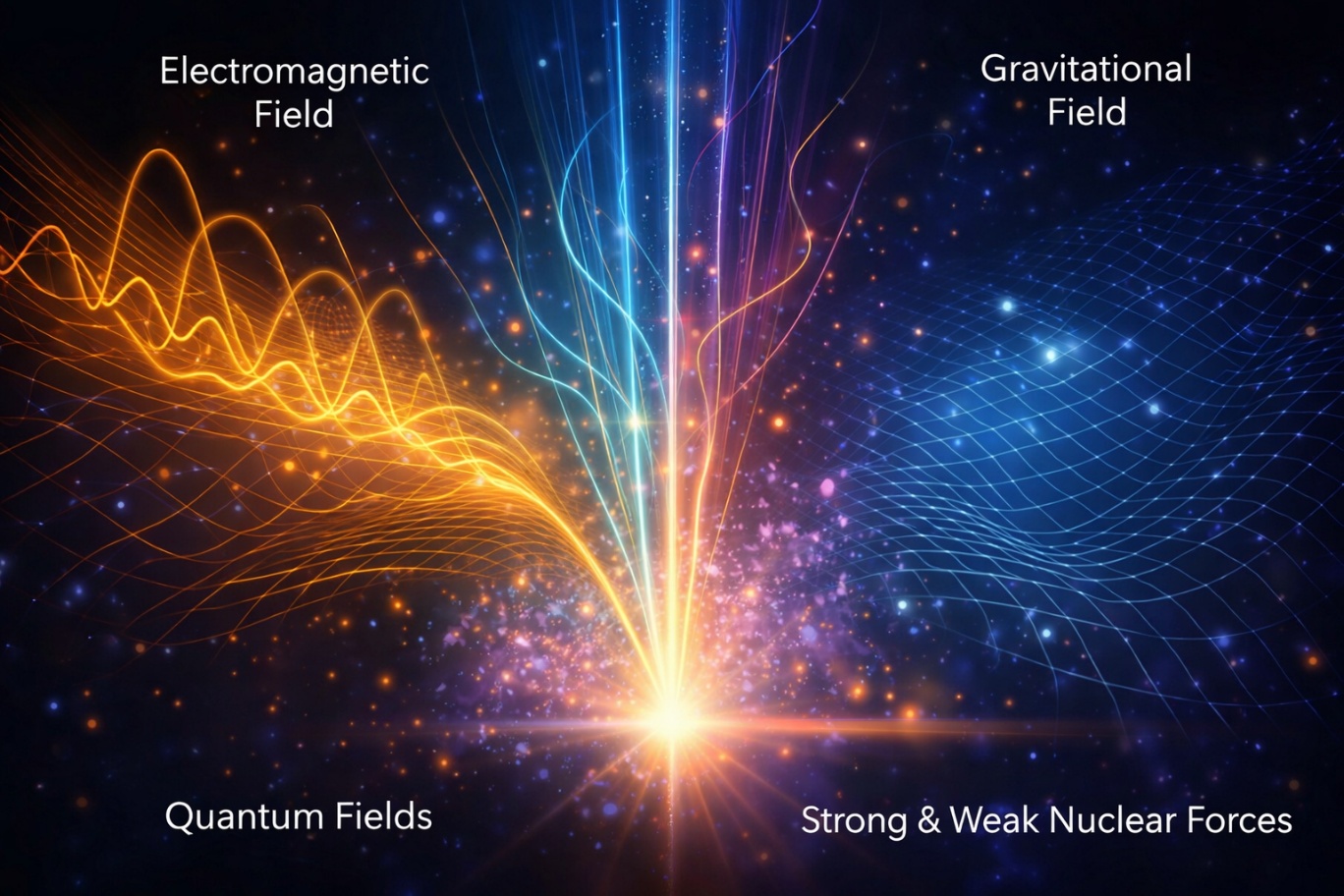
Conceptual illustration of fundamental physical fields emerging from a unified source. Symbolic, not to scale
Chapter 3: The Quantum Vacuum and Non-local Potential
When we hear the word "vacuum," we often think of emptiness—a space without matter, Type equation here.without energy, without life. But in the quantum world, a vacuum is not nothing. It is a vibrant, roiling field of potential. It is the womb of all creation.
The quantum vacuum is the most foundational field in physics. It is the lowest possible energy state of a field, yet it is not truly empty. It seethes with virtual particles that appear and vanish in unfathomable speed, borrowing energy for an instant, then giving it back. These fluctuations are not hypothetical. They have real effects—they shift the position of electrons, affect the decay of atoms, and even impact the expansion of the universe.
In this "emptiness" lies everything.
Physicists speak of zero-point energy—the irreducible energy present even in a perfect vacuum. It means that at the very bedrock of space, there is still motion, still vibration. And where there is vibration, there is information. Where there is information, there is possibility. Where there is possibility, there may be purpose.
This non-material energy is not bound by location. Quantum entanglement shows us that particles separated by vast distances can share states instantaneously, as if space itself is bypassed. In this way, the vacuum field may act as a vast underlying web, linking all things across time and distance. It is the matrix through which non-local connections are made. In spiritual terms, it may be the mechanism through which prayer is heard, revelation received, and consciousness extended beyond the body.
In some interpretations, consciousness itself may be rooted in the quantum vacuum. Not as a byproduct of the brain, but as a fundamental aspect of the universe. Just as particles emerge from the vacuum, perhaps awareness does too. Intelligence, eternal and uncreated, might have always existed in the non-local depths of this energetic silence. As the Lord said to Jeremiah, “Before I formed thee in the belly I knew thee” (Jeremiah 1:5). Intelligence was not made. It always was (D&C 93:29).
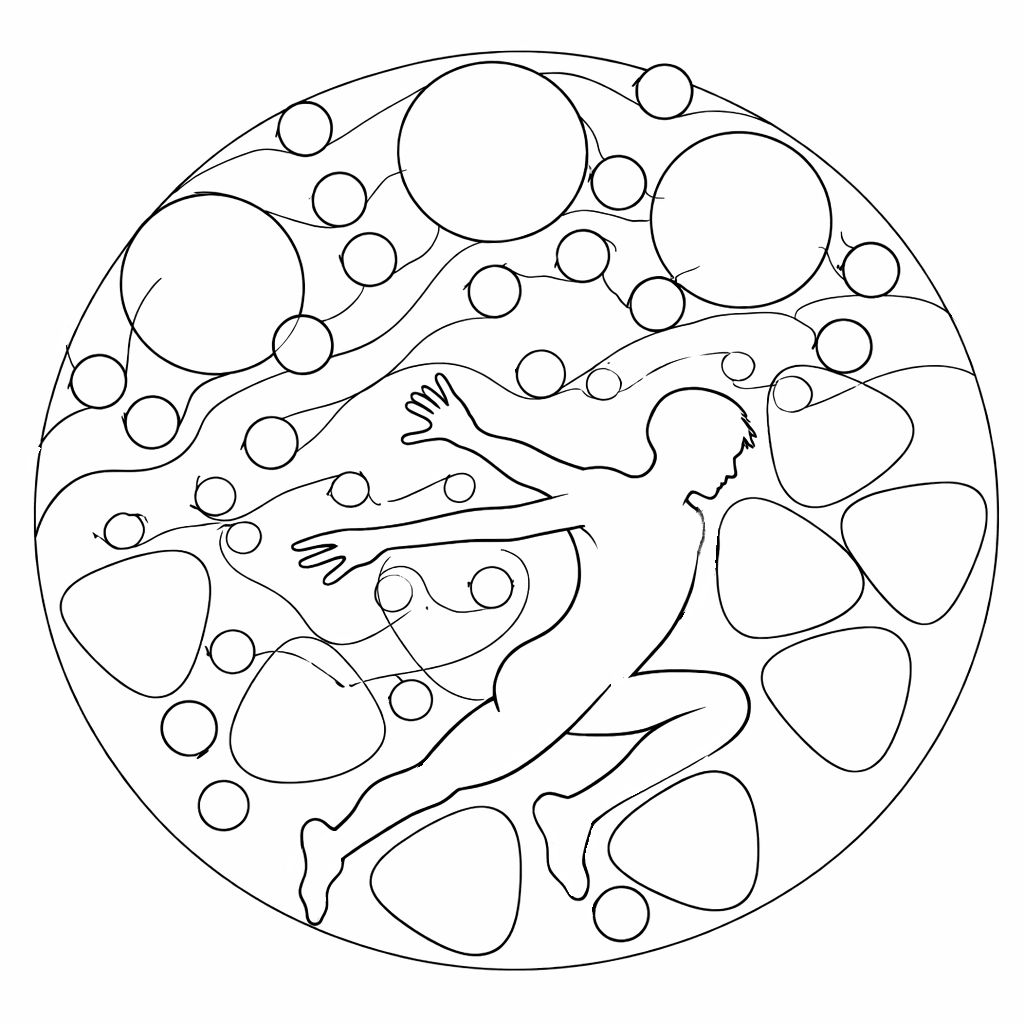
A human intelligence awakening within a vast field of ordered possibility, participating in reality rather than standing apart from it.
For the seeker of both science and spirit, the quantum vacuum is not absence, but fullness. It is not void, but source. It is the silence before the Word, the breath before the body, the light before form. It may be what Doctrine and Covenants calls "the light which proceedeth forth from the presence of God to fill the immensity of space" (D&C 88:12).
And it may be that in the stillness of meditation, or the surrender of faith, we are tuning ourselves to this original field—listening to the whisper beneath all things.
The vacuum is not empty. It is waiting. It is holding. It is becoming.
And from it, all life draws its first yes.
Chapter 4: How Atoms Organize Matter and Non-living Forms
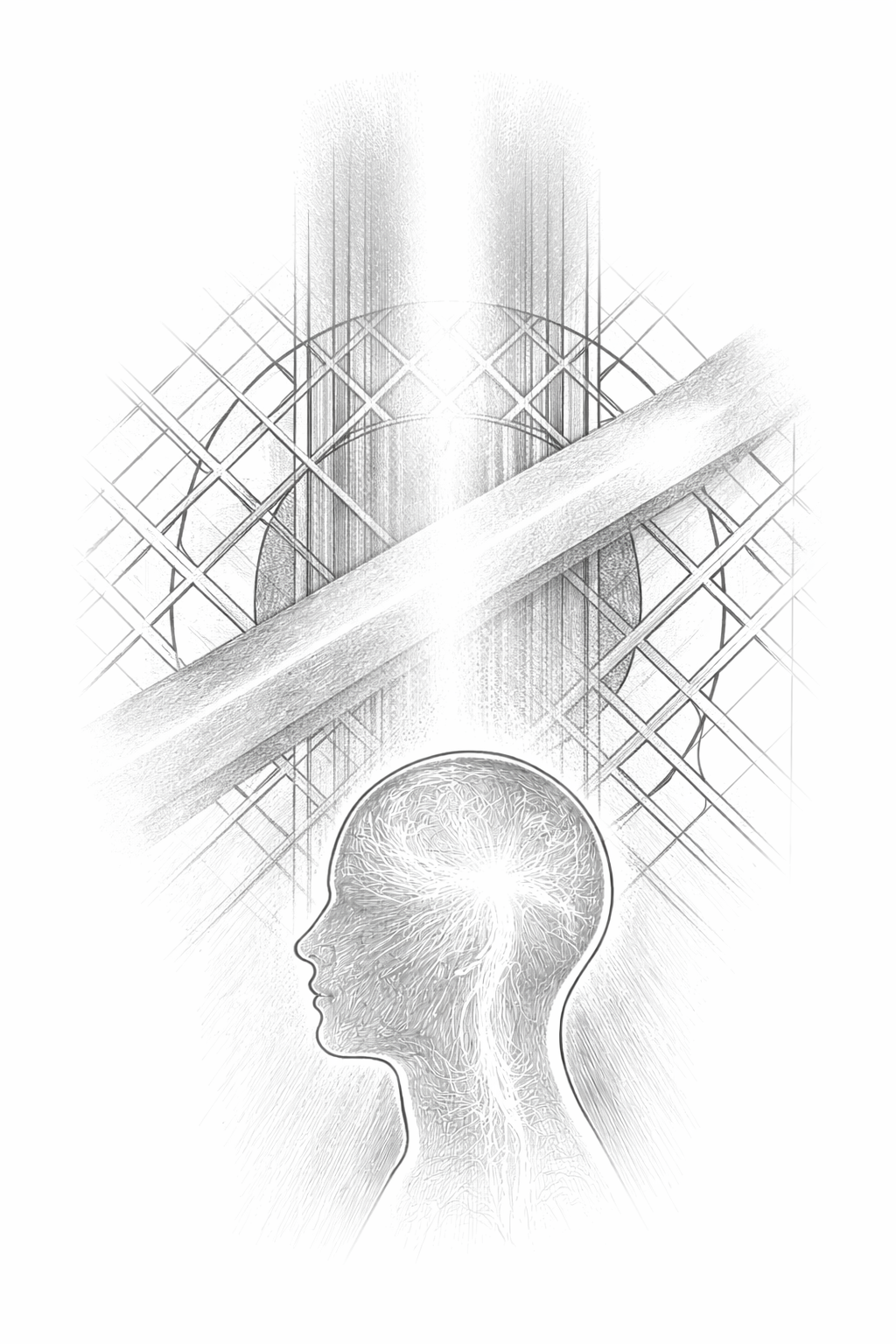
Intelligence does not vanish under structure and law, but passes
through constraint to become embodied and expressed.
This illustration is symbolic, representing ordered potential rather
than literal physical or spiritual form.
Before living cells (in the universe as we understand it) pulsed with energy or breathed with life, there was matter—arranged with precision and purpose by a form of life or intelligence far beyond our current understanding. This may be a life not dependent on nourishment, shelter, or substance as we know them—but rather a partner with existence itself. Perhaps particles are not the smallest units, but vessels of eternal presence—part of an eternal intelligence that was not created but always was. Not life as we define it, but life that simply is.. The journey began with particles, which became atoms, which in turn bonded into elements. These elements are not scattered randomly, but woven into the fabric of form with astonishing fidelity. Each atom, like a note in a cosmic symphony, plays its part in the building of structure, substance, and potential.
Atoms do not live, yet they arrange themselves with elegant intelligence. Through electromagnetic attraction and repulsion, they link together into molecules. These molecules combine into the physical forms we recognize—rocks, metals, gases, and water. Everything from a snowflake to a gemstone is the result of atomic choreography.
A crystal is not just a thing—it is a statement of order. A grain of salt is a perfectly repeating grid of sodium and chloride atoms. A diamond is carbon arranged in a flawless lattice. Even common materials like clay and sand are structured at the atomic level with purpose and pattern. These structures determine how matter feels, how it conducts heat or electricity, how it reflects light, and even how it sounds.
But non-living matter is not just beautiful—it is preparatory. The carbon that forms coal may one day nourish a plant. The calcium in limestone may enter the bones of a child. The oxygen trapped in ice will melt, flow, and become breath. In this way, the inorganic is gently drawn into the sacred story of life. As the Lord declared, “All things are created and made to bear record of me” (Moses 6:63).
Atoms do not intend this. They are not aware. Yet they obey laws that appear to anticipate life’s arrival. Temperature, pressure, and time act as midwives to structure. In the molten belly of the earth, atoms are pressed into crystal. In the sea, salt finds form. In the stars, heavier elements are forged through unimaginable heat. All the while, atoms remain true to their properties—never rebelling, never tiring. “All kingdoms have a law given,” the Lord revealed, “and there are many kingdoms; for there is no space in the which there is no kingdom” (D&C 88:36–37).
Humanity, too, arranges atoms. We melt, mold, and manufacture. When we create a plastic container, or forge a steel beam, we are not making atoms—we are repositioning them. Giving them new relationships. New purposes. The intelligence lies not in the atoms, but in the patterns we shape with them. And yet, even in our hands, they follow their divine script. “The earth rolls upon her wings, and the sun giveth his light by day… all these are the handiwork of mine hands” (D&C 88:45–47).
What we call non-living is not non-sacred. It is the stage upon which life is enacted. It is the vessel into which breath is poured. It is the bone before the body. And without this foundational order—this faithful obedience of atoms—there would be no life to speak of.
Matter is not random. It is reliable. It does not improvise—it follows its divine coding. And in that constancy, we find something holy: a universe patiently preparing for the arrival of soul.
In the beginning, there was matter. And it was good.
Because it waited for life.
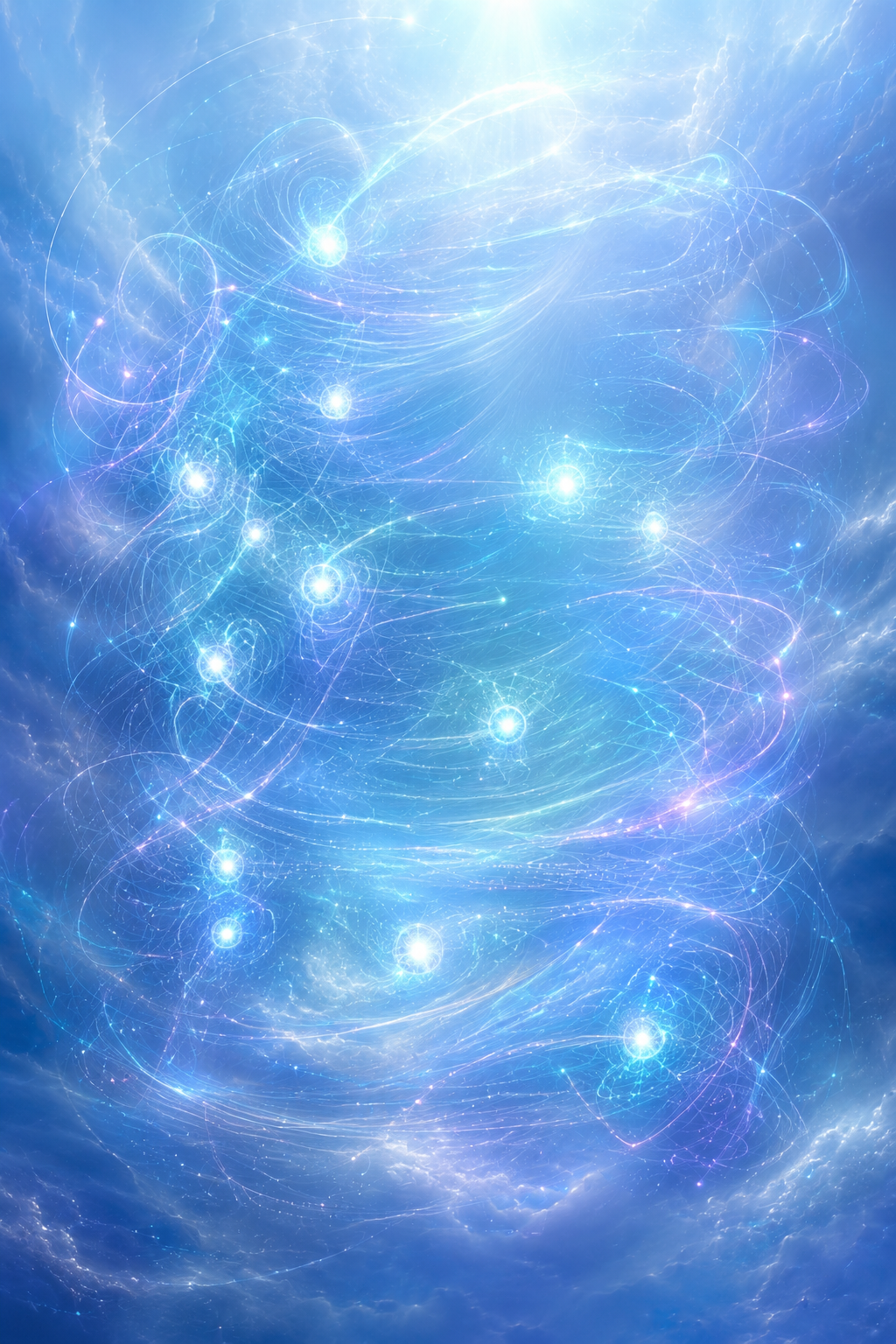
“Man was also in the beginning with God. Intelligence… was not
created or made.”
(D&C 93:29) These are intelligences, not spirits yet.
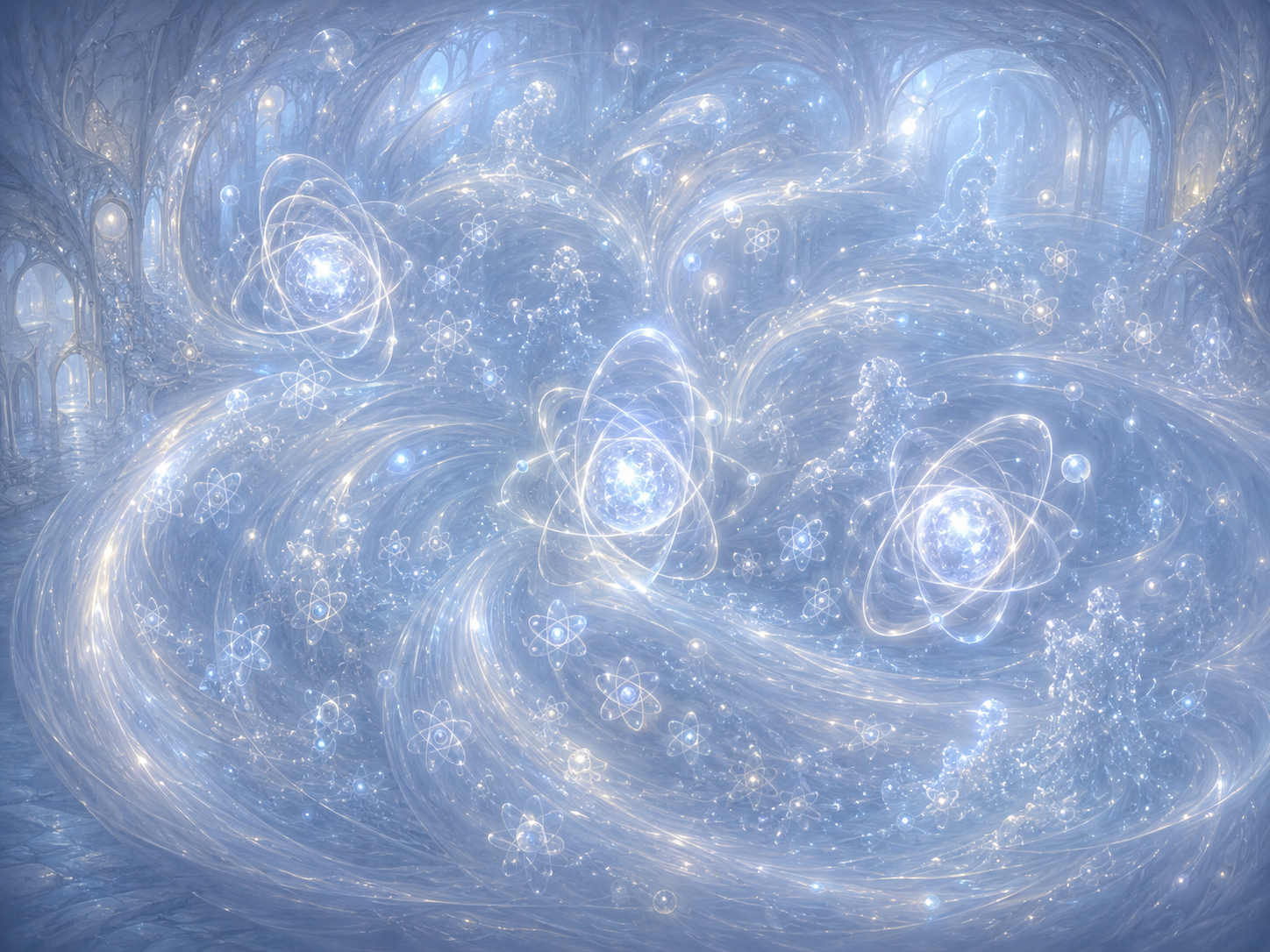
These are spiritual atoms — refined matter (D&C 131:7–8), not physical atoms.
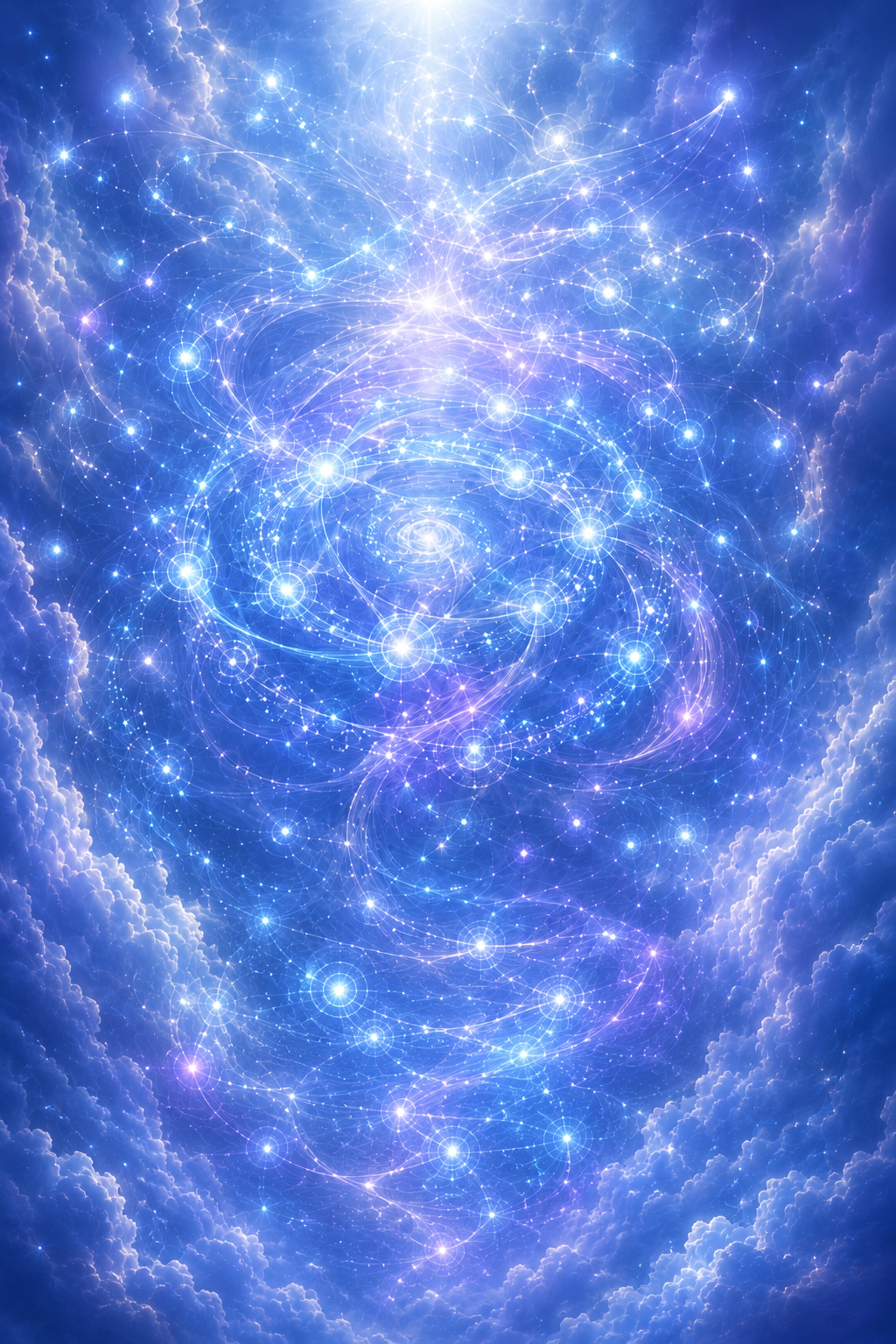
“Before spirit takes form, intelligences—fine and
unorganized—move together in lawful patterns, clustering through
relation and choice, until order invites embodiment.”
(Doctrine & Covenants 131:7; Doctrine & Covenants
93:29)
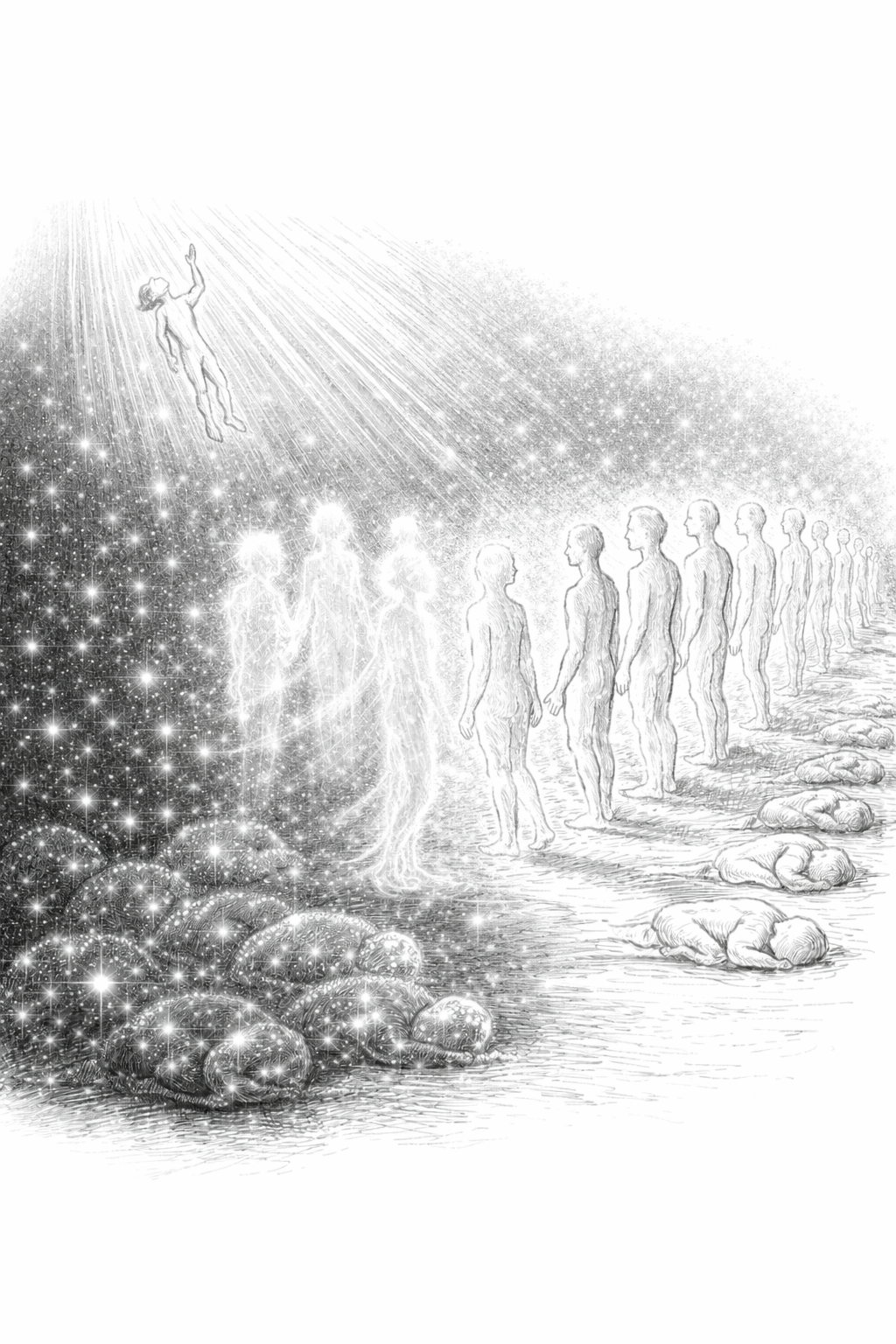
This illustration represents eternal intelligences, organized by divine law into pre-spirit identity, awaiting the reception of spirit bodies and the opportunity to progress toward mortal experience and eternal life (Doctrine and Covenants 93:29).
”
Chapter 5: From Elements to Cells — Life’s Atomic Blueprint
Life is not made of anything new. It is made of the same elements that shape rocks and rivers, stars and soil. What makes life different is not the material, but the pattern. The blueprint.
Cells—the smallest units of life—are made entirely of atoms. Carbon, hydrogen, nitrogen, oxygen, phosphorus, and sulfur form the elemental alphabet of life. These elements arrange themselves into molecules: sugars, fats, amino acids, and nucleotides. These molecules form membranes, organelles, and the double helix of DNA. But at their core, these are all atomic arrangements.
What makes a cell more than a molecular cluster is the organization. Inside every cell is a complex dance of information and structure. Mitochondria produce energy, ribosomes build proteins, the nucleus stores genetic code. Each part plays a role, and each is made of atoms, aligned and sustained by the rules of chemistry and the spark of something more.
Cells are not static—they build, break down, repair, and replicate. They know how to copy themselves, not by thought, but by encoded instruction. DNA is not just a molecule—it is a map, a memory, a message. Written in atomic symbols, it tells the cell what to be and how to become.
From this atomic blueprint, all life unfolds. One cell becomes two, then four, then many. Some become muscle, others brain, others bone. But all carry the same underlying script. This is not randomness—it is a miracle of replication. It is precision that repeats, generation after generation, carried by atoms that never forget their place.
And yet, these atoms are borrowed. The carbon in your body may once have been part of a tree, a mountain, or a bird. The oxygen you breathe once cycled through oceans and stars. Life does not create atoms—it receives them, assembles them, and returns them. We are stewards of the material, not owners. As Ecclesiastes 12:7 reminds us, "Then shall the dust return to the earth as it was: and the spirit shall return unto God who gave it."
What, then, animates this assembly? What turns the in-centric energized geometry of atoms into a cell that breathes, thinks, heals, and hopes? That question lingers at the edge of every microscope and every prayer.
Some would say it is chance and chemistry. Others would say it is spirit. Perhaps it is both. Perhaps spirit is not something added to matter, but something revealed when matter is arranged just right. D&C 88:15 teaches, "The spirit and the body are the soul of man." Life is not one or the other—it is the union.
Life, then, is the emergence of coherence from complexity. It is atomic order rising to meet purpose. And in each cell, we witness that sacred meeting: where atoms become vessels, and vessels become alive. It is the testimony of Alma: "All things denote there is a God" (Alma 30:44). And each cell, even the smallest, whispers that testimony in its quiet work.
Chapter 6: How Life Uses Atoms for Growth, Repair, and Energy
A single cell is a miracle of motion. It moves, it feeds, it builds, and it divides. But it cannot do any of this without atoms. Atoms are not just structure—they are sustenance, energy, and instruction. Life is not only built from atoms; it lives on them.
When we eat, we are not just satisfying hunger. We are receiving the atomic material needed for growth and maintenance. The proteins in a seed, the sugars in a fruit, the minerals in water—all deliver elements to our cells. These atoms are absorbed, sorted, and used to build or repair tissues, power movement, or regulate processes.
Growth is the result of new cells being formed. Each new cell must duplicate everything that came before—membranes, organelles, and most importantly, DNA. Every atom in these structures must be sourced, carried, and placed into position. Enzymes—molecular machines made of atoms—do this work with astonishing precision.
Repair is no less elegant. When cells are damaged, they respond immediately. Signals are sent, broken parts recycled, replacements manufactured. The body knows where to send atoms—calcium to bones, oxygen to tissues, iron to blood—guided by an internal intelligence that operates far below consciousness, but never below meaning. "And the body hath need of every member, that all may be edified together" (D&C 84:110).
Energy, too, is atomic. In the mitochondria, glucose is broken down and electrons are passed along protein complexes. This chain reaction releases energy that is captured as ATP—the cell’s battery. Every step of this process is atomic. It depends on elements like hydrogen and phosphorus, and it flows through channels shaped by the geometry of molecules. Even the breath you take is a molecular exchange: oxygen in, carbon dioxide out—an atomic rhythm of life.
But how do cells know what to do? The answer is layered. DNA provides instructions, RNA carries messages, proteins execute tasks. But deeper still is the fidelity of atoms to their roles. Carbon bonds four ways. Oxygen attracts electrons. Hydrogen bridges molecules. Each atom, by its nature, enables life to unfold with consistency and creativity.
This is where life becomes more than survival. It becomes harmony. The body is not a machine—it is a song played by atoms in tune. And when one part falters, the whole adjusts. This is healing: not just fixing, but returning to coherence. It is the reordering of atoms, not by chance, but by design. As Paul taught, “God hath tempered the body together… that there should be no schism in the body” (1 Corinthians 12:24–25).
In life, atoms are not just moving randomly. They are being directed. Sometimes by enzymes, sometimes by electrical signals, and sometimes—perhaps—by thought. There is evidence that conscious intention can influence healing, immune response, even the behavior of cells. If this is true, then life does not merely use atoms. It communicates with them.
To grow, to heal, to live is to participate in a continuous act of creation. And in this act, atoms are the notes—but life is the melody. And the melody is composed by eternal intelligence: “The spirit and the body are the soul of man” (D&C 88:15).
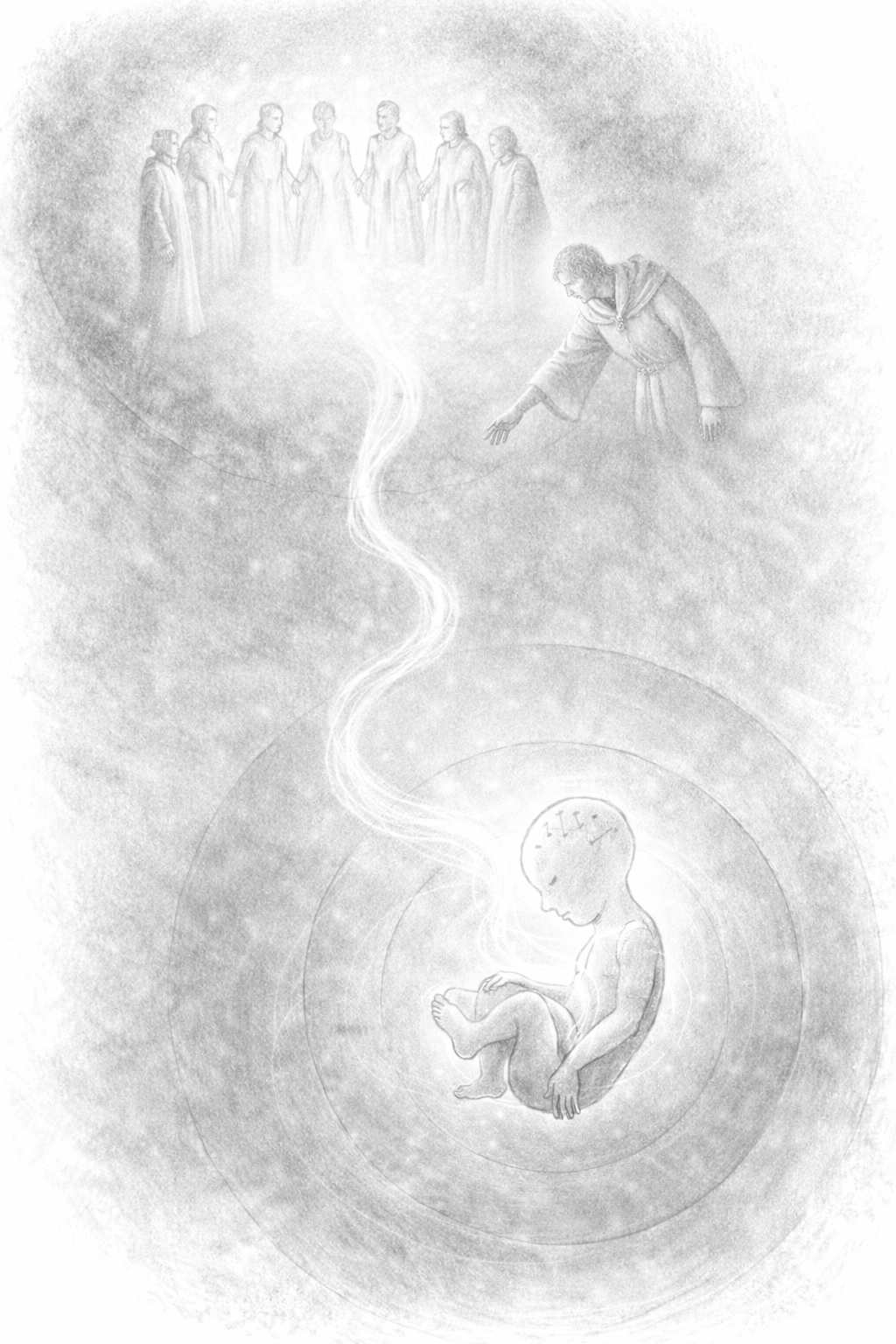
“From a circle of robed spirits, one turns in loving awareness as a spirit descends through a conduit into embodied life, echoing the truth that ‘man was also in the beginning with God’ (Doctrine and Covenants 93:29), and suggesting—without claiming—that consciousness may persist as structured relation before matter, much as modern physics hints that order precedes form.”
Chapter 7: Living on the Quantum Scale — A Cellular Perspective
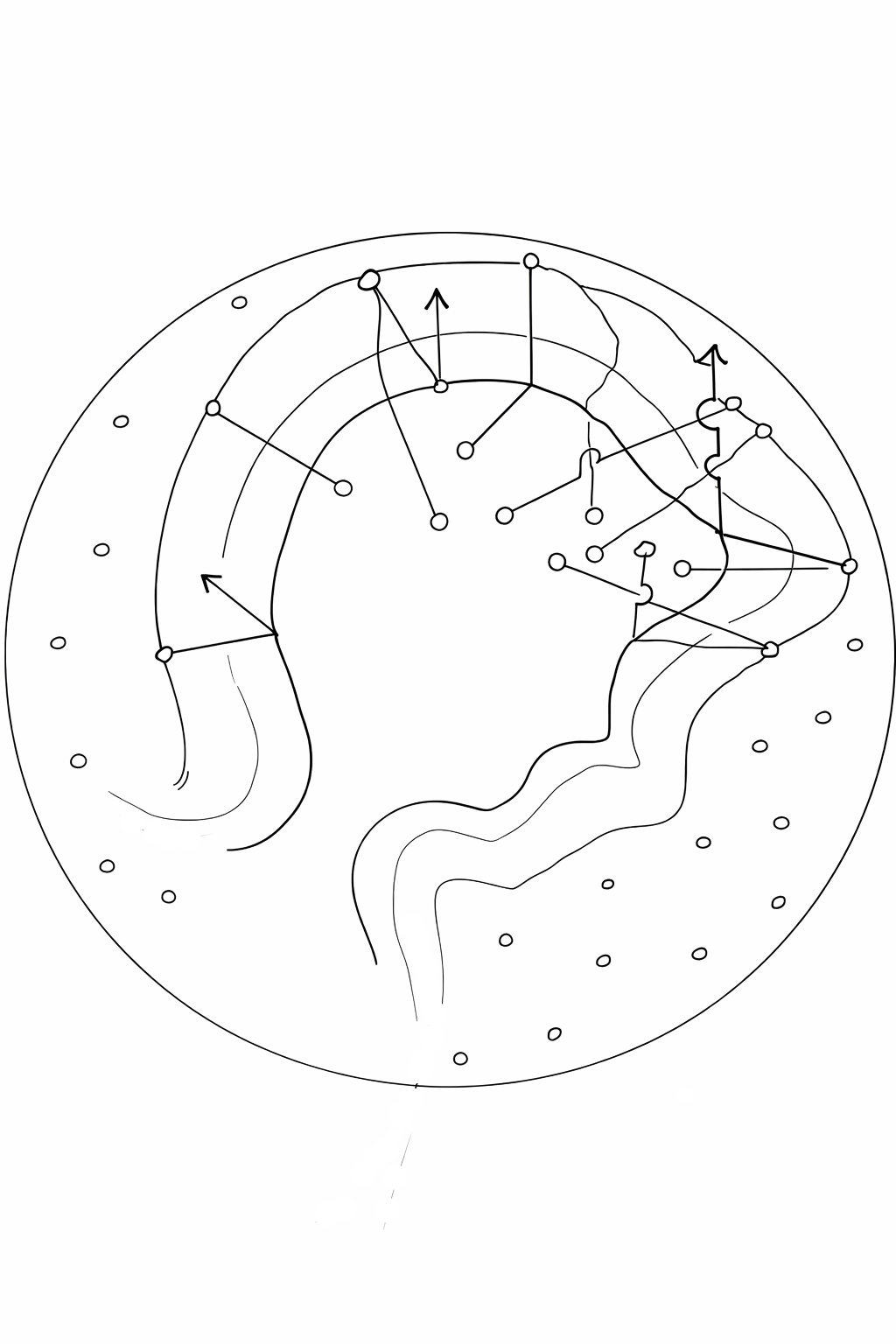
Consciousness as the boundary where intelligence is received, translated, and expressed within lived experience.
If we could shrink ourselves down to the scale of a single cell—and then smaller, to the size of its organelles, then its molecules, and finally to the atoms and particles within—we would not find stillness. We would find a world alive with vibration, exchange, and mystery.
Life is not only made of atoms. It lives through them. Every living cell is a stage where quantum principles continue to operate. The cell may be large enough to see through a microscope, but its life depends on behaviors that cannot be fully explained by classical physics.
Inside the cell, electrons tunnel, particles exchange positions, and proteins fold with uncanny speed and accuracy—too precise, some say, for random chance. At the smallest levels, quantum effects may play a role in how enzymes catalyze reactions, how molecules find their targets, and even how signals are transmitted across neural pathways.
Quantum coherence—the alignment of particles into unified behavior—has been observed in photosynthesis, bird navigation, and perhaps even the firing of neurons. These are not speculative ideas; they are emerging fields of biophysics. In the coherence of living systems, we begin to see life not as the end of quantum reality, but as its expression.
Even the structure of microtubules in neurons—cylindrical scaffolds within cells—has been proposed to sustain quantum states. The Orch-OR theory suggests that consciousness may arise from orchestrated quantum events in these structures. Whether this proves true or not, the proposal itself is a doorway: a recognition that life may be rooted deeper than biochemistry.
On this scale, location becomes blurred. A particle may be in many places at once. Time may behave unpredictably. Causes and effects tangle. And yet, the cell continues—dividing, responding, learning. How? Because life does not fight uncertainty. It uses it. “By small and simple things are great things brought to pass” (Alma 37:6).
A cell is not static—it is a quantum-informed processor. It collects inputs, balances needs, and makes adaptive decisions. It cannot “think” as we do, but it remembers, responds, and creates. It is not conscious in the human sense, but it acts with purpose, guided by something we are only beginning to understand.
Perhaps this is why cells resonate with spiritual symbolism. They carry light (in mitochondria), truth (in DNA), and power (in bioelectric fields). They live on boundaries—of matter and meaning, of biology and energy, of seen and unseen. D&C 88:11–13 declares, “the light which is in all things, which giveth life to all things… which is in all things, and is the law by which all things are governed.”
To live is to carry out atomic work, yes—but to live consciously may be to carry out that work with awareness of the quantum dance beneath it. A cell does not ask what it is. It simply is. Yet we, built from these cells, can ask. We can wonder. And that wonder might be our own quantum resonance with the Source of all things—the Spirit that “enlighteneth every man that cometh into the world” (John 1:9).
Chapter 8: Lifespan of Atoms vs. Lifespan of Living Systems
All things in life are measured in time. Seeds sprout, bloom, wither, and fall. Creatures are born, grow, and pass on. Even mountains erode and oceans shift. But beneath all of this impermanence lies something persistent: the atom.
Atoms do not grow old. They do not die. While living things change constantly, the atoms that compose them endure. The carbon in a tree, the iron in blood, the oxygen in your breath—these atoms existed long before you were born and will persist long after your body returns to dust.
This contrast is striking. Cells divide and expire. Organs wear out. Brains forget. Yet the atoms within these structures carry on, as silent witnesses. In every death, the atoms are released, disassembled from their former form, and carried forward—into soil, into air, into water, into the life of another.
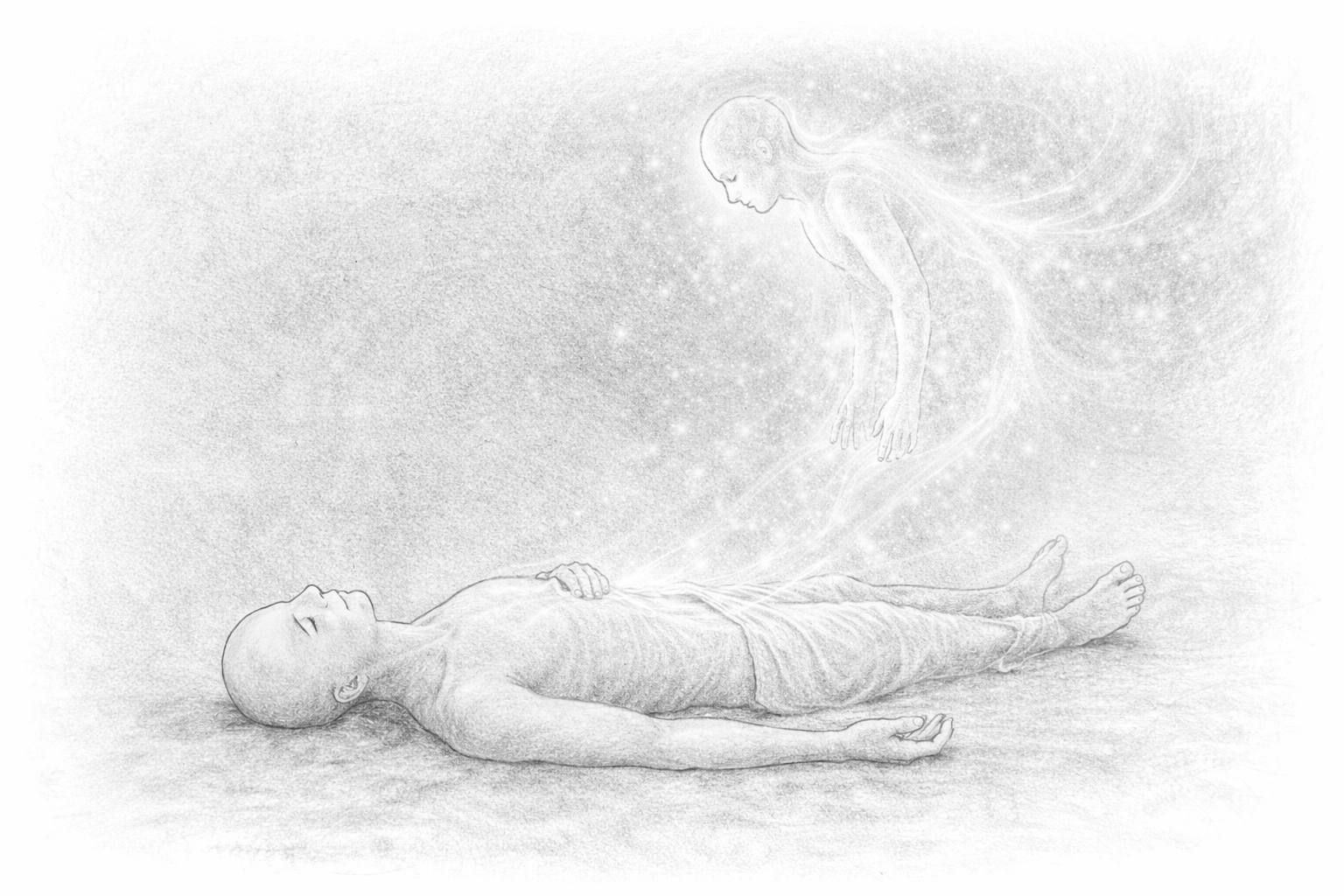
“the spirit and the body are the soul of man” (D&C 88:15), and here they are gently parted.
You do not own the atoms in your body. You borrow them. And during your life, you continually exchange them. The food you eat becomes part of your flesh. The breath you exhale becomes part of the world. Even your bones are remade over time. Few, if any, of the atoms you were born with still remain in you decades later. Yet you have remained you.
This brings us to a subtle mystery: if atoms are replaced, what holds identity together? It is not the material, but the pattern—the structure, the sequence, the memory encoded in arrangement. You are not a fixed collection of matter. You are a dynamic field of organization. And that organization is what makes you, you.
The same is true of all living systems. A tree lives not because it holds onto its atoms, but because it continually reorganizes them. A human body, a cell, a brain—all are sustained by a balance of intake, use, and renewal. Atoms come and go, but life persists by tending to the arrangement. "All things must be done in order" (D&C 28:13), and life’s persistence reflects this divine pattern.
Even when a body dies, its atoms remain active. They break down. They merge with the soil. They become food for bacteria, nutrients for plants, oxygen for breath. They continue their journey—not randomly, but purposefully. In this way, non-living atoms contribute to the continuity of life.
There is a humility in this. We are not permanent in body, but each atom continues on for eternity—quietly obeying the laws it was given, honoring its divine design. In this, perhaps, is a lesson for the soul: to live as the atom lives—faithfully, continually, in quiet worship. As the Prophet Joseph Smith taught, every particle, every element, every atom praises God. And so, within us, there may be a mirrored desire—to be steady, obedient, eternal like the atom, and drawn upward in reverence to the Source that sustains all things. “All things denote there is a God; yea, even the earth, and all things that are upon the face of it” (Alma 30:44).
The same hydrogen in your blood may one day fuel a star. The calcium in your teeth may help build coral in the sea. And the carbon that once gave you warmth may return to light another life.
So while life is brief, atoms are enduring. And through them, the memory of life is not lost. It is passed on, carried silently in the structure of the world. This is the hidden legacy of every living thing: not what it kept, but what it gave back to the eternal rhythm of matter.
Chapter 9: What is Consciousness? Degrees and Properties
Consciousness is the great mystery. We can describe atoms. We can chart the brain. We can even measure brainwaves and map neural circuits. But the feeling of awareness—the "I am" at the center of experience—remains beyond the reach of our tools. It is not something we observe. It is something we are.
What is consciousness? It is the capacity to perceive, to think, to feel, and to act with intention. It includes awareness of self and other, memory, imagination, and will. But these are only expressions. The essence of consciousness may be something deeper: the presence of a knowing center, a witness within.
There may be degrees of consciousness. A stone exists, but does not sense. A plant senses, but does not choose. An animal chooses, but may not reflect. A human reflects, imagines, creates, and prays. Each layer adds more—but all may be forms of awareness, nested in complexity.
Some traditions say that even the atom is aware—not of thoughts, but of order. It obeys. It aligns. It does what it was made to do. Joseph Smith once taught that “there is no such thing as immaterial matter. All spirit is matter, only more fine or pure” (D&C 131:7–8). Perhaps consciousness is not something added to matter, but something revealed through it—like light through stained glass.
Consciousness may express different properties: intelligence, which discerns; memory, which holds; emotion, which values; creativity, which transforms. Each of these may be a facet of the same inner flame. Some thinkers say that consciousness is not produced by the brain—it is received by it, like a radio receiving a signal. The brain filters, focuses, and interprets—but the light comes from elsewhere.
And if consciousness has properties, can it grow? Can it refine? Can it deepen? The answer seems to be yes. Through thought, prayer, learning, love, and surrender, human consciousness becomes more open, more expansive, more divine. “The glory of God is intelligence, or, in other words, light and truth” (D&C 93:36). In this way, consciousness is not just a state—it is a journey.
We are not merely observers of the world. We are participants in its unfolding. Consciousness allows us to not only witness reality, but to shape it—through choice, intention, and meaning. This is sacred power. "For as he thinketh in his heart, so is he" (Proverbs 23:7).
So what is consciousness? It is the presence behind the eyes, the light within the mind, the whisper in the silence. It is what makes experience possible and what makes growth meaningful. It is the mystery closest to us—yet furthest from our grasp. And it may be the part of us that is most eternal.
Chapter 10: Quantum Theories of Consciousness — Orch-OR, Decoherence, Panpsychism
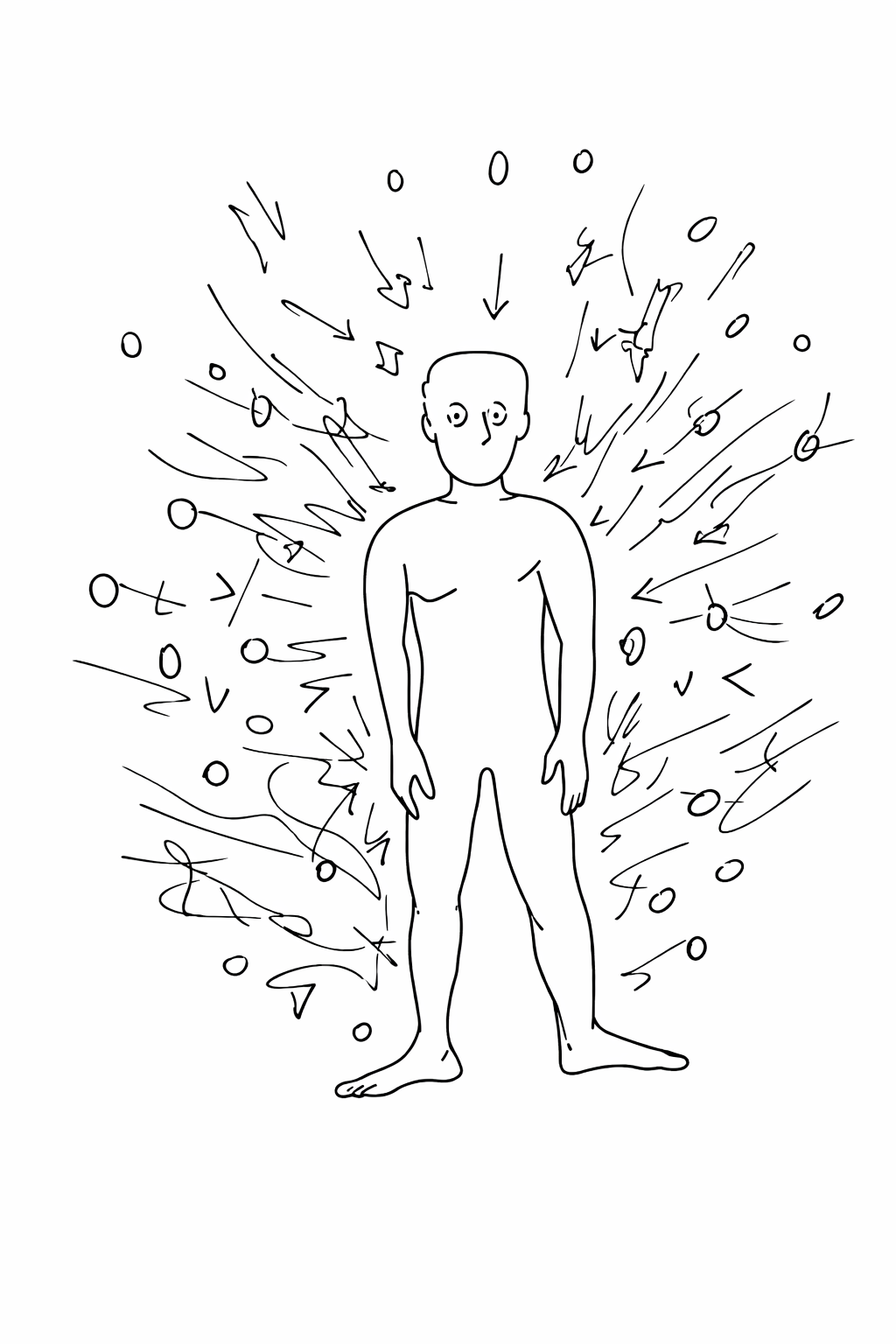
A conscious person standing within continual influence, exercising agency amid forces that shape but do not determine identity.
If consciousness is not merely the product of biology, then perhaps its source lies deeper—in the quantum foundations of reality. Over the past few decades, a growing number of scientists, philosophers, and mystics have proposed bold theories connecting consciousness with quantum mechanics. These theories do not all agree, but together they form a constellation of insight pointing to the same idea: that mind and matter are woven together at the smallest scales.
One of the most discussed models is Orchestrated Objective Reduction (Orch-OR), developed by physicist Roger Penrose and anesthesiologist Stuart Hameroff. They propose that consciousness arises not in the synapses of the brain, but in the microtubules—tiny structures inside neurons. These microtubules may support quantum coherence, allowing quantum states to persist long enough to influence thought. When these states collapse—or reduce—they produce conscious experience. This theory bridges the brain and quantum field in a rhythm of wave and awareness.
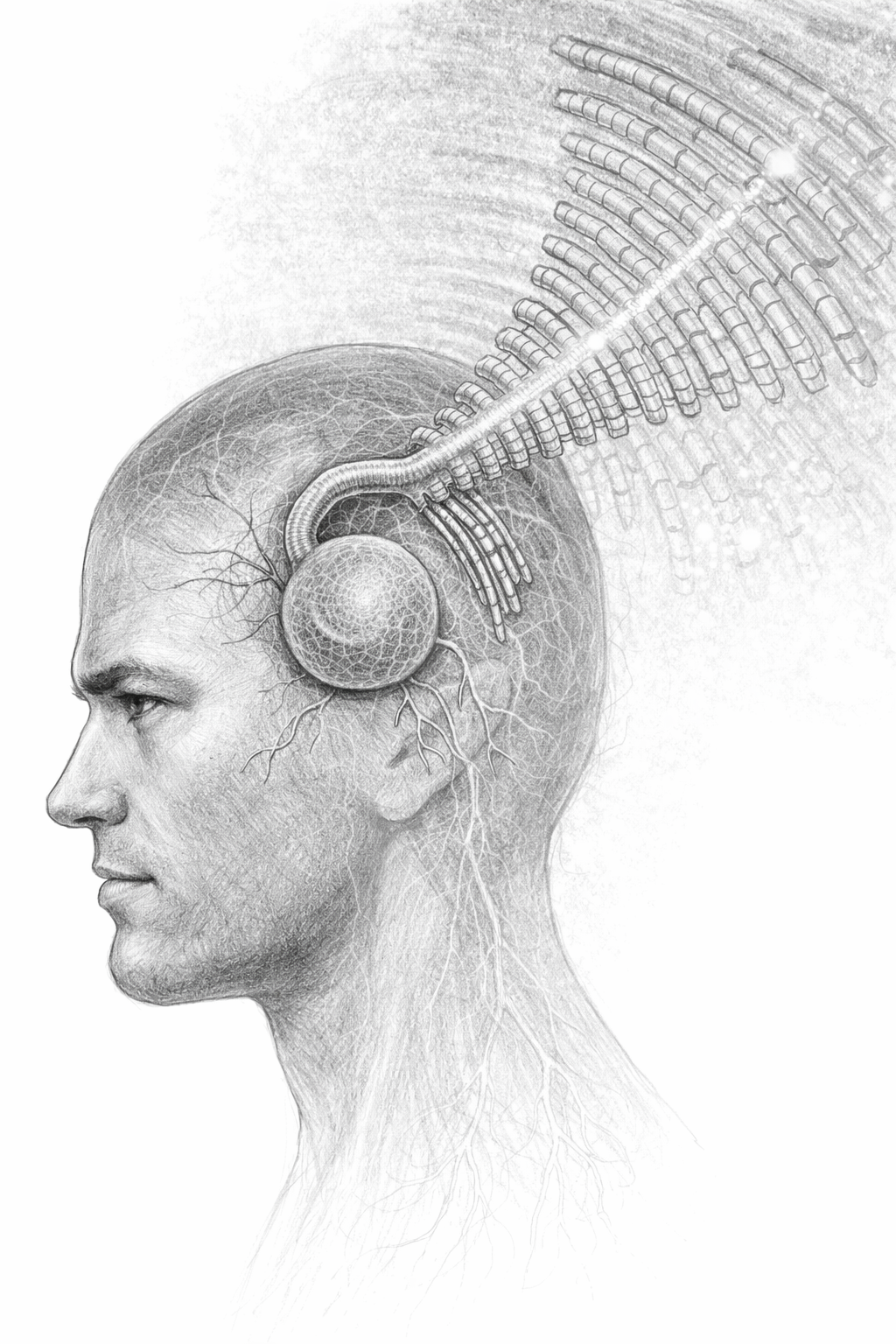
Conceptual microtubular activity is depicted symbolically rather than anatomically—inner coherence nodes radiate informational pathways outward, not by physical scale or location, but by relational resonance—illustrating how consciousness organizes from nonlocal order into embodied awareness
Then there is Quantum Decoherence, a process well-known in physics. It describes how quantum possibilities “collapse” into classical realities when observed or measured. Some suggest that consciousness may be the observer—not just watching, but choosing which path becomes real. In this way, the mind shapes matter, not after the fact, but as part of its unfolding. “As a man thinketh in his heart, so is he” (Proverbs 23:7).
Panpsychism takes a more metaphysical approach. It proposes that consciousness is not rare or emergent—but fundamental. Every particle has some degree of awareness, some seed of experience. In this view, atoms are not unconscious—they simply possess a simpler form of what we call mind. As complexity increases, so does the richness of consciousness. A human is not a sudden miracle, but a culmination of many small awakenings.
These theories are not without critics. Quantum processes are delicate, and the brain is warm and wet—not ideal conditions for coherence. Yet experiments continue. And even where answers elude us, the questions themselves reshape our understanding of what it means to be alive.
Why would consciousness arise at all? Why should particles align into thought? These questions invite awe. Perhaps the universe is not building toward mind—but built from it. Perhaps consciousness is not an effect, but a cause—a hidden architecture from which atoms derive their instruction.
Latter-day Saints believe intelligence is eternal—“the light of truth, which was not created or made, neither indeed can be” (D&C 93:29). This resonates with quantum models that treat consciousness not as an accident, but as a presence embedded in the structure of reality.
Whatever theory proves most accurate, all suggest this: that we are not separate from the fabric of the cosmos. We are its aware dimension. We do not just walk through creation—we wake it.
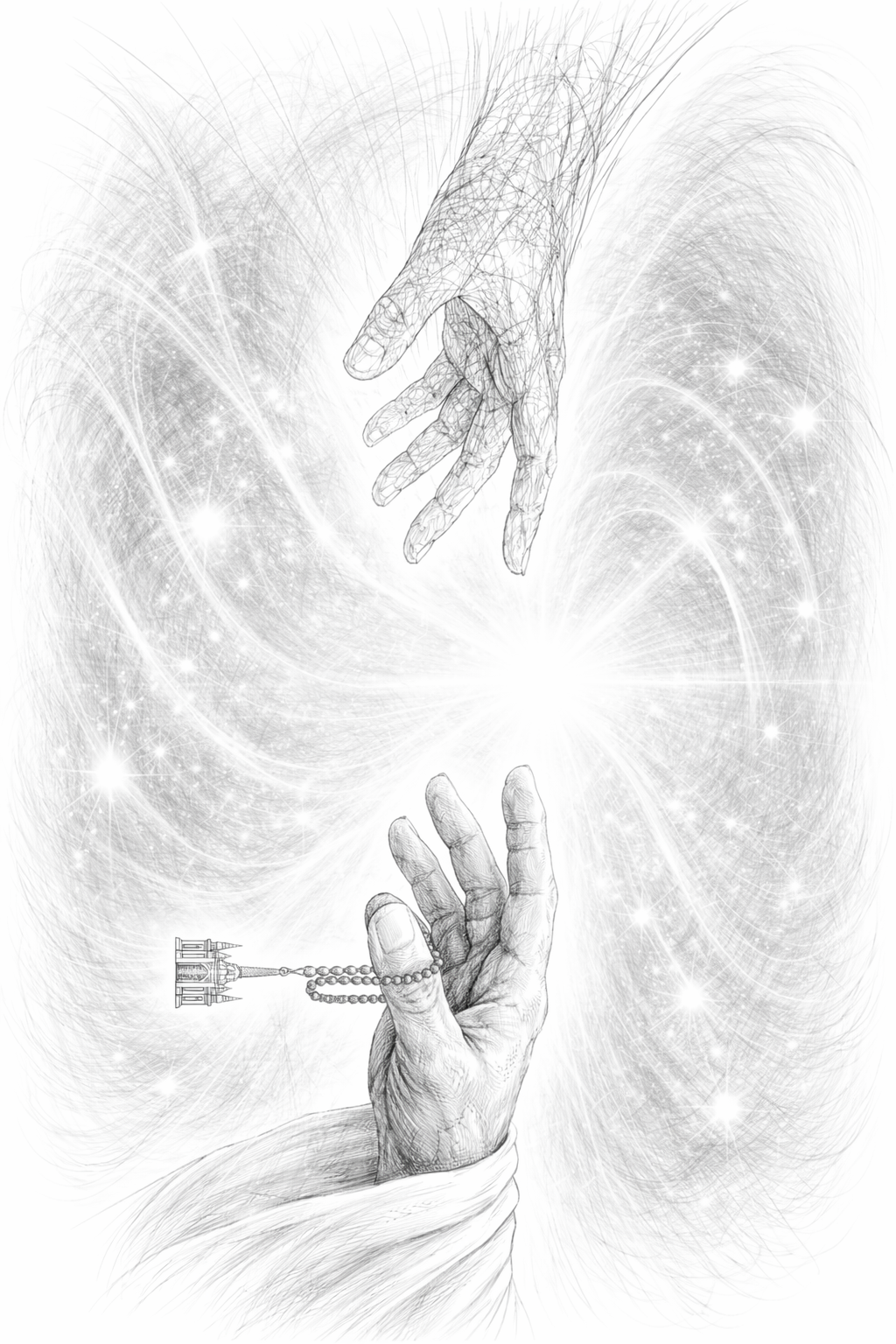
“Two hands reach across a radiant field of light—one shaped by knowledge and structure, the other by faith and covenant—meeting in the shared space where human understanding touches divine intelligence.”
Chapter 11: Thought, Creativity, and Intelligence in Matter
Thought is the most intimate act of the soul. It is invisible, immediate, and powerful. Yet somehow, this invisible force of thinking arises from the very same atoms that form the material world. Creativity, too—our ability to imagine, design, and build—is not some add-on to biology, but woven into the nature of life itself.
How does matter think? How can dust dream?
The key lies in the organization of atoms, the way they are arranged in living systems—especially the brain. Neurons are built from proteins, which are built from molecules, which are built from atoms. But these are not just physical arrangements—they are functional. The brain is not just a structure; it is an orchestra. Electrical signals, chemical messengers, quantum fluctuations—all combine to produce thought.
But thought is not limited to neurons. Every act of creativity begins with a whisper of intention—sometimes before a word is formed, before a single synapse fires. It begins in awareness. From there, the mind moves: shaping, testing, reworking. This creative impulse may be our truest signature, a reflection of the divine.
Latter-day Saint scripture teaches that "intelligence" was not created, nor can it be. It is eternal (D&C 93:29). This idea resonates with the mystery of consciousness itself—that our minds are not accidents, but revelations of something deeper. Intelligence may not just inhabit matter—it may shape it.
And even deeper still is the mystery of spirit creation. Perhaps, as some have reflected, God the Father creates spirit bodies—in the same creation sequence as here on earth. This reflects the sacredness of creation given to man and woman: the power to create life in partnership with God. It is not only a biological act but an eternal stewardship, and the most important task given in mortality. Through it, we learn divine patterns of family, responsibility, and love. It is the gateway to the genealogy of the eternal family it mirrors and supports—where intelligence is united with a spiritual form. These spirit bodies, like our mortal bodies, may be incubated, formed, and born in likeness of their Heavenly Parents. Unlike flesh, however, these spirit creations cannot pass away. They are eternal, and in the resurrection, they are reunited with every atom of their former earthly physical form—and also with the spirit elements of their pre-earth life, their divine parentage, their covenants, their personality, their memory, their love, and all that is known and unknown to both science and mortality. This sacred restoration reflects Latter-day Saint teachings that the soul is eternal, that "the spirit and the body are the soul of man" (D&C 88:15), and that the resurrection will restore us to a "perfect frame" (Alma 11:43–44), retaining knowledge, relationships, and divine identity. In this reunion is a restoration of full knowledge—of God, of self, of eternal identity, and of the loved ones who journeyed with them across eternity. This reunion of spirit atoms and physical atoms forms a resurrected being, never to die again.
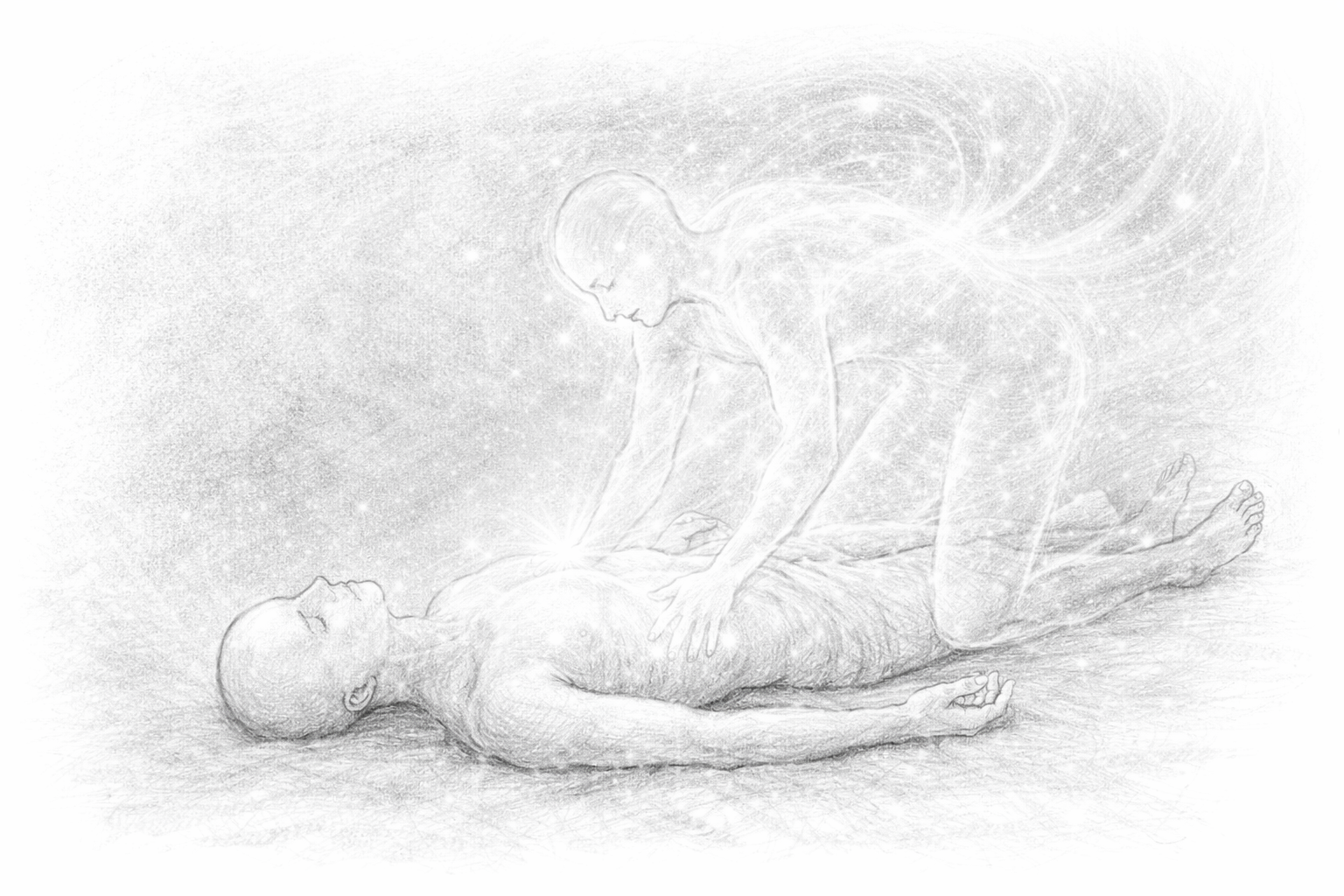
“the spirit and the body shall be reunited again in its perfect form.”
This leads to a profound question: if intelligence created the atom, is that intelligence the real me? The source of my consciousness? Intelligence must have created consciousness—because consciousness is a property of intelligence, much like light is a property of flame. Just as fire brings light into a dark room, intelligence brings awareness into the universe. This relationship may help us understand how even in the smallest seed of spirit, there can reside the potential for vast, divine awareness. And the more intelligence there is, the more expansive the awareness, the deeper the perception, and the greater the creative potential.
When we draw a line, compose a song, build a tool, we are commanding matter with thought. We do what no rock or river can do—we rearrange the world on purpose. And in doing so, we leave a mark. Creativity is not a byproduct of life. It is its purpose. “For the power is in them, wherein they are agents unto themselves” (D&C 58:28).
We also see this intelligence mirrored in nature. A spider’s web, a bird’s migration, the spirals of galaxies—there is pattern, elegance, and what seems like wisdom. Even atoms behave with precision, responding to laws we did not write. Perhaps the universe is not mute. Perhaps it is a thought being expressed in time.
We do not yet understand how thought arises from the material. But we can feel its reality. We can witness its beauty. And in every idea, every spark of invention, we are reminded that intelligence is not just in us—it is through us, and possibly before us.
To think is to echo the mind of God. To create is to participate in that mind. And to build with matter is to remember that intelligence may not only use atoms—it may have designed them in the first place.
Chapter 12: The Eternal Nature of Intelligence in Latter-day Saint Thought
Among the most profound teachings in Latter-day Saint doctrine is the declaration that intelligence is eternal. It was not created, and it cannot be destroyed. It is the foundational essence of personal identity. As stated in the Doctrine and Covenants, “Man was also in the beginning with God. Intelligence, or the light of truth, was not created or made, neither indeed can be” (D&C 93:29).
This single verse opens a cosmic door. It suggests that each of us—our truest selves—existed before the world was, and will exist forever. Intelligence is not simply what we know, but what we are. It is the divine essence from which spirit is organized. Before spirit birth, before mortal birth, there is intelligence. And even before that, there are particles—the building blocks of all reality. Quantum mechanics teaches us that particles behave as both energy and potential, without beginning or end in their most fundamental states. From eternity to eternity, these particles move, interact, and form matter and spirit alike. Intelligence and particles may be two sides of the same eternal coin—where thought and form, awareness and energy, have always existed. It is the 'me' before memory. The eternal I.
If intelligence is eternal, then it must carry properties that transcend time: self-awareness, the capacity to learn, a yearning for truth, and the potential for love. These qualities are not inserted into us—they are awakened in us, nurtured through experiences across pre-mortal, mortal, and post-mortal life.
God the Father, in Latter-day Saint understanding, took these intelligences and organized them into spirit children. These spirit children were given form, identity, gender, and a divine heritage. But their intelligence—the spark of individuality—was already present. Thus, each person is both created and uncreated, shaped and self-existent.
This doctrine creates an astonishing foundation for agency. Intelligence, like the four fundamental forces—gravity, electromagnetism, the strong and weak nuclear forces—is unseen, yet unquestionably real in its effects. We cannot see gravity, yet it holds the stars in orbit. We cannot see intelligence, yet it sculpts the arc of every life, every choice, every act of love. It is the unseen essence that brings purpose to energy and form to consciousness. Scripture affirms this in the phrase, "The glory of God is intelligence, or, in other words, light and truth" (D&C 93:36). Intelligence is what allows us to discern, to choose, to love, and to become.
The Book of Abraham echoes this eternal pattern: “If there be two spirits, and one shall be more intelligent than the other... these two facts do exist, that there are two spirits, one being more intelligent than the other” (Abraham 3:19). Intelligence is not static; it grows. It expands, it glorifies. It is not lifeless. It is life at its deepest root.
Other traditions, especially in the East, have spoken of this same core truth in different languages. The Atman in Hinduism, the Buddha-nature, the Tao—all describe a conscious essence that underlies and unifies all things. Latter-day Saint theology does not need to erase these ideas but can embrace them as distant echoes of the same truth: that there is something in each of us, something uncreated and luminous.
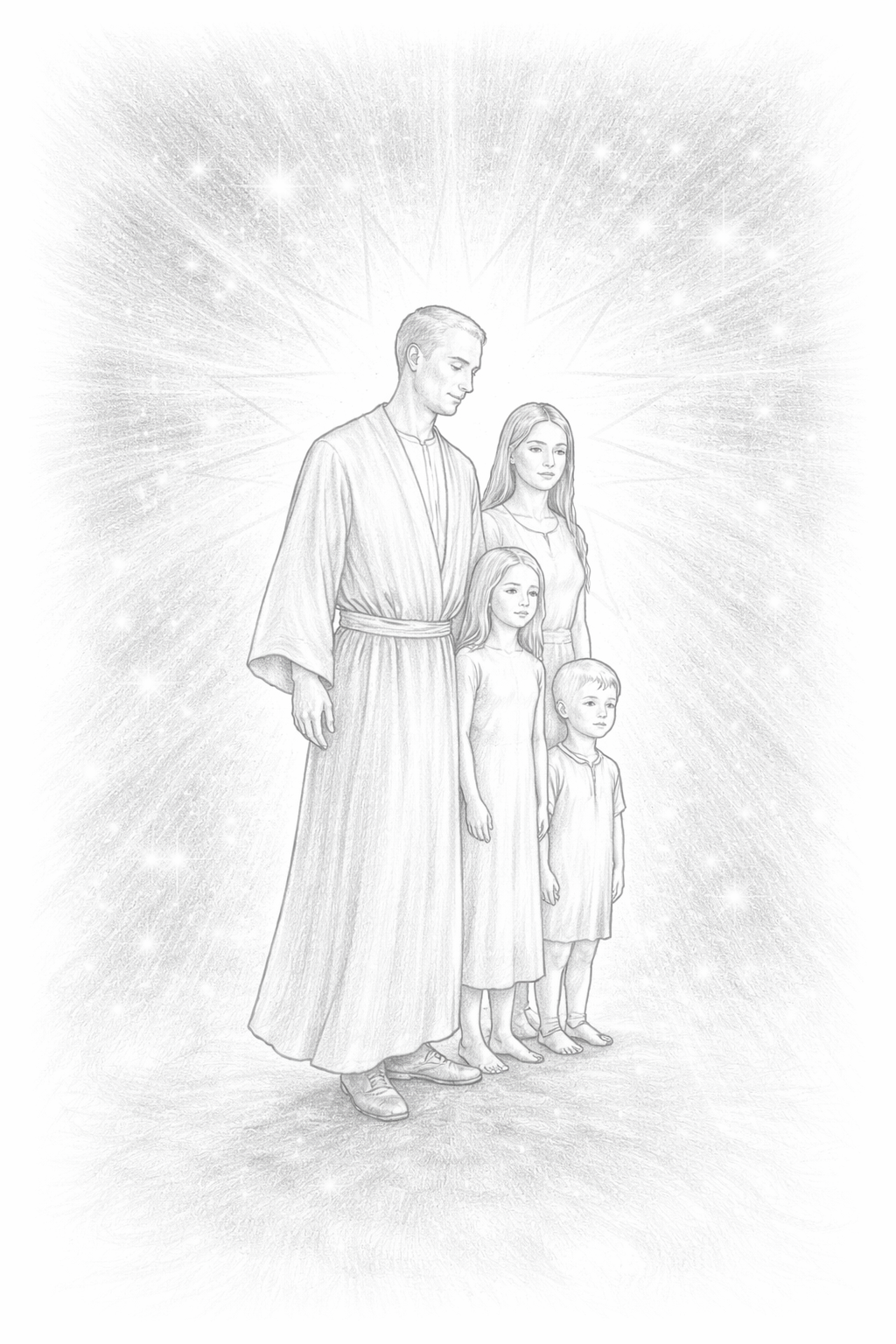
Celestial life is not solitary perfection, but shared progression—intelligences receiving light upon light, continuing together in eternal increase.
In this view, mortality is not the beginning of identity, but a chapter in its unfolding. It is a school, a proving ground, and a sacred opportunity for intelligences to grow in wisdom, love, and divine likeness. The body is not a prison, but a necessary vehicle that allows eternal intelligence to interact with the physical world.
At death, we do not vanish—we return. Intelligence continues. Spirit remains. And in the Resurrection, body and spirit are joined forever, glorified and inseparable. Intelligence, having journeyed through all realms, now shines in fullness.
This understanding offers immense dignity to every soul. No one is a cosmic accident. Each person is a radiant intelligence, ancient and alive, seeking light. And God, the Father of spirits, invites all to become like Him—not just in appearance, but in eternal nature.
To know this is not simply to believe something beautiful. It is to remember something true.
Chapter 13: Agency, Light, and the Path to Divine Likeness
Agency is the divine ability to choose. In Latter-day Saint theology, it is sacred—not a peripheral gift, but a central feature of existence. God did not merely allow agency; He ensured it, protected it, and embedded it into the very architecture of the plan of salvation. Without agency, there is no growth. Without choice, there is no becoming.
What empowers agency? Light. The Doctrine and Covenants declares: “The light of Christ is given to every man, that he may know good from evil” (D&C 93:2). This light is not metaphorical—it is real. In fact, when Joseph Smith described the appearance of the Father and the Son, he saw a light “above the brightness of the sun” descending upon him—brighter than noonday. This was not ordinary light. It was a radiant, eternal manifestation of divine presence. In a physical sense, photons—those weightless particles of light—are not made of atoms, but are more fundamental, existing as pure energy. Yet, like the protons at the heart of an atom, photons may be part of an eternal architecture. Perhaps they are among the first creations of divine will, the carriers not just of visible light, but of spiritual truth and divine presence. It is the spiritual force that illuminates conscience and awakens the inner compass. It is also the subtle influence that allows intelligence to act rather than be acted upon.
This idea finds resonance even in quantum physics. Particles at the subatomic level exist in states of possibility until observed or interacted with. This potential—this openness—mirrors the principle of agency. Creation itself seems to operate on a field of options. Light, in both science and scripture, becomes the carrier of truth and the energy of decision.
To become like God, we must grow in light. Not only in knowledge, but in purity, love, and divine intent. The more light we receive, the more we perceive. The more we perceive, the more wisely we can choose. As the scripture says, “That which is of God is light; and he that receiveth light, and continueth in God, receiveth more light; and that light groweth brighter and brighter until the perfect day” (D&C 50:24).
Agency is not random wandering—it is purposeful progression. And perhaps it is here that we find the whisper of conscience—the undetermined and deeply personal self-awareness that arises in the midst of quantum potential. Conscience may be the inner dialogue of the soul with eternity, the self-observing nature of agency itself. In a quantum world full of probabilities, conscience becomes the internal compass that argues, weighs, and ultimately chooses. It may be the "me" at the heart of every decision—the spark of intelligence reflecting on its own path, seeking the light from which it came. Each choice refines the soul. Each step toward truth, however small, draws us nearer to divine likeness. The spiritual forces around us, like the physical ones, respond to our movement. Where there is humility, there is growth. Where there is love, there is expansion.
The path to divine likeness is not a leap but a journey. It is walked through acts of grace, sacrifice, discipline, and daily discernment. It is not reserved for the elite, but extended to all intelligences willing to choose light. And that path, once walked long enough, no longer feels foreign. It begins to feel like home.
In the end, to become like God is not just to shine—it is to love with perfect intent. It is to choose with eternal vision. It is to be free not from responsibility, but for it. Agency makes us creators. Light makes us holy. And together, they draw us upward into the divine image from which we came.
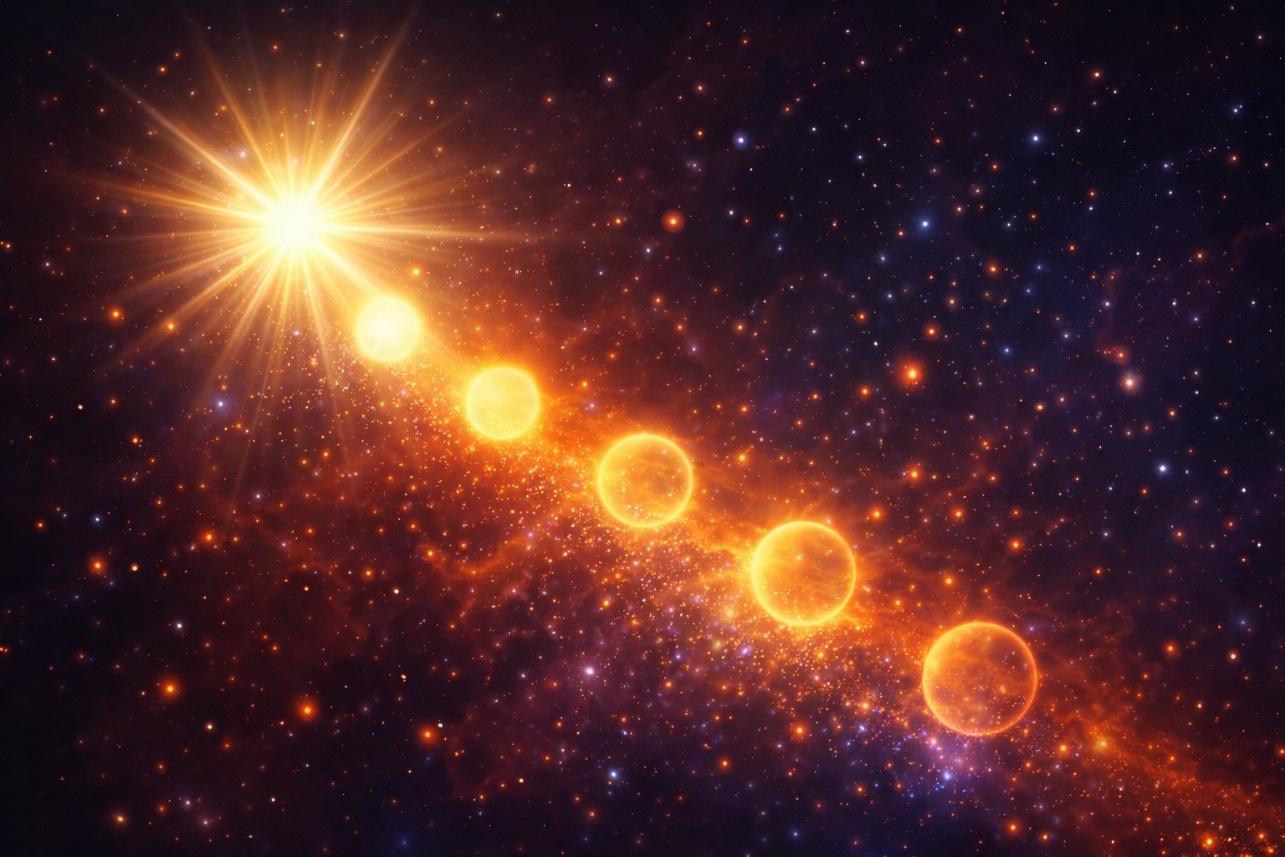
“Progression in light: eternal intelligence grows through agency, receiving light upon light until the perfect day.”
Chapter 14: Spirit, Matter, and the Soul's Unity
Latter-day Saint theology declares that the soul is not just the spirit, and not just the body, but the union of both: "And the spirit and the body are the soul of man" (D&C 88:15). This truth defines mortality, but it also points toward eternity. The final destiny of the faithful is not to escape the body, but to reunite spirit and flesh in glory.
This view contradicts ancient Greek philosophy and much of traditional Christianity, which often regard the body as a hindrance to the spirit. In contrast, Latter-day Saint doctrine teaches that the body is a sacred part of divine identity. It is not an accident. It is an inheritance from Heavenly Parents. And though it is mortal and subject to decay, it is destined for resurrection.
Joseph Smith taught that spirit is matter—"but it is more fine or pure" (D&C 131:7–8). Spirit matter is not visible to mortal eyes, but it is real, tangible, and eternal. It interacts with physical matter but operates on a more refined vibrational frequency, much like light or energy. If quantum fields vibrate to produce particles, perhaps spirit matter vibrates at a higher, unobserved layer of reality.
This has profound implications. It suggests that the separation of body and spirit at death is temporary and unnatural. It also explains why the resurrection is so central to God’s plan. In resurrection, every atom of the body is restored and sealed to the spirit with perfect integrity. The elements that once made up a mortal body will be summoned, reassembled, and exalted.
Such a resurrection is not symbolic. It is physical and real. As the Apostle Paul taught, “For as in Adam all die, even so in Christ shall all be made alive” (1 Corinthians 15:22); the same Christ who rose from the tomb with a glorified body promises resurrection to all mankind, each receiving a body according to the glory they receive. As Paul taught, “There is a natural body, and there is a spiritual body” (1 Corinthians 15:44), and in the resurrection, they become one.
Even more, this doctrine reflects divine justice. Every memory, every relationship, every righteous desire is preserved. In the resurrection, we do not merely return to life—we return to wholeness. Intelligence, personality, love, memory, and covenant are all restored and exalted.
The uniting of spirit and body is the final act of divine healing. It transforms weakness into power, sorrow into joy, and mortality into immortality. And because spirit and body are eternally bound, the soul is made complete.
This unity of spirit and matter also reflects the structure of all creation. Just as the temple unites heaven and earth, and the covenant unites the mortal and the eternal, so the soul unites spirit and flesh. All things sacred come in union. This is the pattern of God.
To honor the soul is to honor both the body and the spirit. To care for one is to strengthen the other. And to prepare for eternity is to learn how to live as a whole being—with a spirit refined and a body consecrated, moving together in the light of divine purpose.
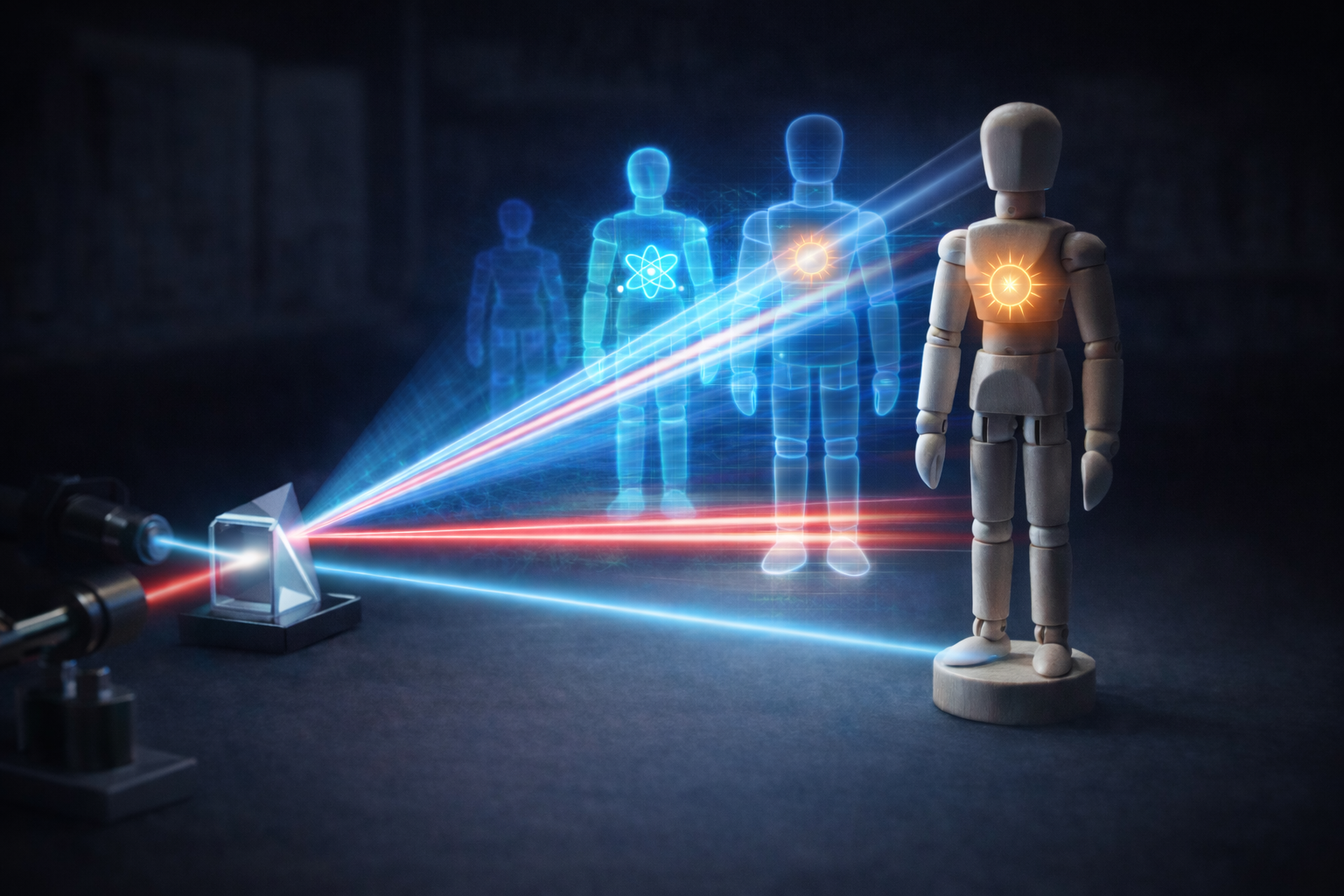
Holographic reconstruction of identity. Laser light is split and recombined to reveal layered coherence of the same form, symbolizing spirit (quantum emblem), mortal embodiment (earth), and restored glory (sun), unified through assimilation rather than replacement.
Chapter 15: Spirit, Matter, and the Resurrection of the Eternal Body
In the restored gospel, the resurrection is not just a return—it is a transformation. It is not merely spirit returning to God or body returning to dust. It is the reuniting of both, eternally sealed, glorified, and never to be separated again. This reunion forms what Latter-day Saint doctrine calls the soul: "The spirit and the body are the soul of man" (D&C 88:15).
The resurrection is not symbolic—it is literal. Every atom of the mortal body, whether scattered to the winds or dissolved in the sea, will be gathered again. This miraculous restoration is not just poetic—it is a declaration of divine precision and intent. It fulfills the words of Alma, that “even a hair of the head shall not be lost” (Alma 11:44).
But what kind of body will this be? Paul taught that the resurrected body is not the same as the mortal one: "It is sown a natural body; it is raised a spiritual body" (1 Corinthians 15:44). The spiritual body is matter, but refined—quickened, glorified, and animated by eternal intelligence. Joseph Smith taught, “There is no such thing as immaterial matter. All spirit is matter, but it is more fine or pure” (D&C 131:7–8).
This teaching is bold. It affirms that resurrection does not abandon the physical world—it redeems it. It also implies that matter is not opposed to spirit, but destined to be one with it. Spirit is not ghostly or ephemeral—it is organized energy, refined matter, clothed in glory.
From a quantum perspective, even the particles of the body—protons, neutrons, electrons—are never destroyed. They are eternal, rearranged, redistributed, but always accounted for. If God numbers the hairs of our heads, He also numbers the particles of our being. The resurrection may therefore be a divine reweaving of quantum threads—a sanctified realignment of identity through matter and light.
The body restored in the resurrection is not only immortal but exalted to the worthiness it obtains by the covenants that it receives and keeps—or would have kept. It is not only alive, but luminous. It is not only whole, but holy. This body will no longer be subject to pain, decay, or death. It will be fit for the presence of God and capable of eternal increase.
To be resurrected is not to be restored to where we were—but to rise into who we are meant to be. A fullness of joy requires a fullness of form. And in that glorified body, intelligence, memory, conscience, and love will be fully housed.
This is the promise of the resurrection: not the end of the body, but its divine beginning.
Chapter 16: The Divine Design of the Universe
From the stars in the heavens to the atoms within our bodies, the universe operates with astonishing precision. This is not the result of accident, but of divine design. “Worlds without number have I created,” the Lord declared to Moses, “and by the Son I created them, which is mine Only Begotten” (Moses 1:33). Creation is not random—it is relational. It is purposeful. It is eternal.
The laws of physics, the constants of nature, the delicate balance of forces—from gravity to electromagnetism, from strong to weak nuclear interaction—create the conditions in which life can exist. If any one of these constants were even slightly different, the universe would be inhospitable. This has led many to recognize what is called the “fine-tuning” of the universe. In Latter-day Saint understanding, this fine-tuning reflects not just intelligence, but love.
God does not merely create space—He creates place. Earth is not just a planet—it is a proving ground. And the elements of the earth, once viewed as raw and inert, are revealed in scripture to be purposeful: “The elements are eternal, and spirit and element, inseparably connected, receive a fullness of joy” (D&C 93:33). The universe is not only a backdrop; it is a participant in eternal progression.
Quantum theory supports this sense of meaningful participation. At the most fundamental level, particles interact in non-local ways, appearing connected even when separated by great distances. This suggests a universe not of cold separation, but of intimate entanglement—what physicists call quantum coherence. Such phenomena hint at the deeper spiritual truth that all things are known to God and held together by His power.
Laws, in this divine framework, are not restrictions but revelations. They show us how the universe operates in wisdom and order. As the Prophet Joseph Smith taught, God “comprehendeth all things, and all things are before him” (D&C 88:41). The cosmos is not chaos—it is covenantal.
The elements themselves seem to obey eternal laws with perfect consistency. They are not aware in the way we are, but they respond in ways that reflect divine programming. And just as God speaks and matter obeys, so too are we invited to align our agency with divine will.
To behold the universe through this lens is to see with spiritual eyes. Joseph Smith, though young and unlearned by worldly standards, spoke of matter, elements, and even particles in ways that resonate deeply with truths only recently discovered by modern science. He taught that all spirit is matter, too fine to be discerned by mortal eyes (D&C 131:7–8), and he spoke of intelligence existing in every particle. He was not referring to the chemical elements of compounds, but to the foundational building blocks of existence—spiritual and material elements that respond to divine law.
His insights are often overlooked in favor of Eastern traditions, which are praised for their poetic connection to nature and reincarnation. While there is beauty in Eastern thought, it is not more profound than the revealed truths in the Restoration. Joseph taught of a premortal life, where we lived with God, chose our path, and were sent to Earth not to become someone else in a future life, but to become our eternal selves. We may have visited Earth before birth, and we will surely return to it after death. Our eternal progression is not a cycle of forgetfulness and rebirth in new identities, but a journey of remembrance and return to our divine identity.
It may seem more fashionable to speak of karma and oneness than of covenants and resurrection, but the restored gospel offers a clearer and deeper framework for eternal identity. We are not becoming someone else—we are remembering who we have always been. Stars are not just fireballs—they are ancient beacons. Particles are not just units of energy—they are part of an eternal composition. The universe is not just designed—it is designing. And we, as children of God, are not spectators. We are stewards, creators, and inheritors of divine design.
To understand creation is to know the Creator. And to live in this universe is to participate in its unfolding purpose—an eternal pattern of becoming, light, and love.
Chapter 17: Covenants, Eternal Identity, and the Path of Return
At the heart of the restored gospel is the sacred covenant—a divine agreement between God and His children. Covenants are not contracts in the worldly sense; they are invitations into relationship, promises of transformation, and markers of eternal identity. Through covenants, we do not merely follow God—we become more like Him.
Every ordinance in the gospel—from baptism to temple sealing—is a covenantal act. But these covenants are only made valid through divine authority—restored through the Prophet Joseph Smith. He and his transcriber, a humble schoolteacher named Oliver Cowdery, received that authority from heavenly messengers. But this restoration was not the origin. The authority began in the very beginning—when Christ, as Jehovah and the Son of God during the creation of this earth, gave the priesthood to Adam. That same priesthood was handed down through righteous prophets, preserved through dispensations, and reestablished in our time to prepare the world for Christ’s return.: John the Baptist and later Peter, James, and John. This priesthood is not of man, but of God. It is the very same power given to Adam, passed through the ancient prophets, and held by Jehovah—Christ Himself—who administered it in His earthly ministry and restored it again in the latter days.
This authority is known as the Melchizedek Priesthood, or the Holy Priesthood after the Order of the Son of God (D&C 107:3). It is not only permission—it is power. Without this priesthood, covenants lack recognition before God. But with it, they are sealed in heaven and on earth.
This priesthood may be seen as the divine force underlying all others—a spiritual parallel to the strongest of the physical forces that govern particles and atoms. It is invisible to the eye, yet stronger than gravity, more binding than electromagnetism. It governs not just matter, but destiny. It is the power by which worlds are created, souls are sealed, and lives are transformed.. Each one aligns us with divine law, connects us to Christ’s atoning power, and awakens within us a memory of who we are. We are not wanderers seeking to invent ourselves—we are children of God remembering our divine origin.
Latter-day Saint theology teaches that we existed as intelligences before we were born. Our spirits were organized by God the Father, and we accepted His plan before coming to Earth. These premortal choices reflect our agency, and our mortal covenants reflect our desire to continue on the path of divine return.
Covenants are binding not because they are restrictive, but because they are empowering. They anchor us to truth, offer access to priesthood power, and enable us to receive revelation, protection, and healing. A covenant-bound soul is not merely obedient—it is sealed, sanctified, and aligned with celestial purpose.
This path of return—back to God, back to our divine potential—is marked by covenants. As we keep them, we gain light. As we honor them, we inherit glory. The covenants we make are echoed in the resurrection, for we will rise not only with a body, but with an eternal identity that reflects our spiritual integrity.
The sealing power, restored through the Prophet Joseph Smith, makes eternal families possible. This doctrine does more than comfort—it reveals a structure in eternity. We are not alone. We are part of an eternal family, each soul connected, each covenant forming threads in an everlasting tapestry.
In this light, covenants are not merely personal—they are cosmic. Just as quantum entanglement connects particles across time and space, covenants connect souls across generations and eternities. In quantum theory, entangled particles share a bond that remains even when they are separated by vast distances. Likewise, through divine sealing, families remain connected across mortality and into eternity, bound by power and law that transcends time.
This eternal bond is reflected in Malachi’s prophecy that "he shall turn the heart of the fathers to the children, and the heart of the children to their fathers" (Malachi 4:6). It echoes the Savior’s promise in John 14:2, that in His Father’s house are "many mansions," prepared for those who abide in Him. And in D&C 132:19, we learn that those who enter into eternal covenants shall inherit thrones, kingdoms, and a continuation of the seeds forever.
Covenants, like quantum links, cannot be seen with the natural eye—but they are real, measurable by their effects: loyalty, light, peace, and purpose. They are channels of divine coherence, where agency, grace, and identity meet. Just as quantum systems display coherence—a unifying wave of possibility before collapse—so too does consciousness interact with memory and covenant. Our eternal intelligence holds the imprint of premortal knowledge, and our memory, when awakened by the Spirit, recalls sacred truths not learned in this life.
This suggests that consciousness is not merely emergent—it is eternal. It functions like a quantum field: sensitive, expansive, influenced by choices and divine connection. Through covenants, our consciousness becomes aligned with divine will, creating a resonance that extends into eternity. As Moroni declared, "by the power of the Holy Ghost ye may know the truth of all things" (Moroni 10:5). That knowing is not simply learning—it is remembering, deep calling unto deep.: loyalty, light, peace, and purpose. They are channels of divine coherence, where agency, grace, and identity meet.
As we walk the covenant path, we are not just changing—we are remembering. And in that memory, in that walk, we find home.. They bind generations, link heavens and earth, and connect the individual to the divine pattern. As we walk the covenant path, we are not just changing—we are remembering. And in that memory, in that walk, we find home.
Chapter 18: The 'I Am' Within: Common-Sense Intelligence and Eternal Identity
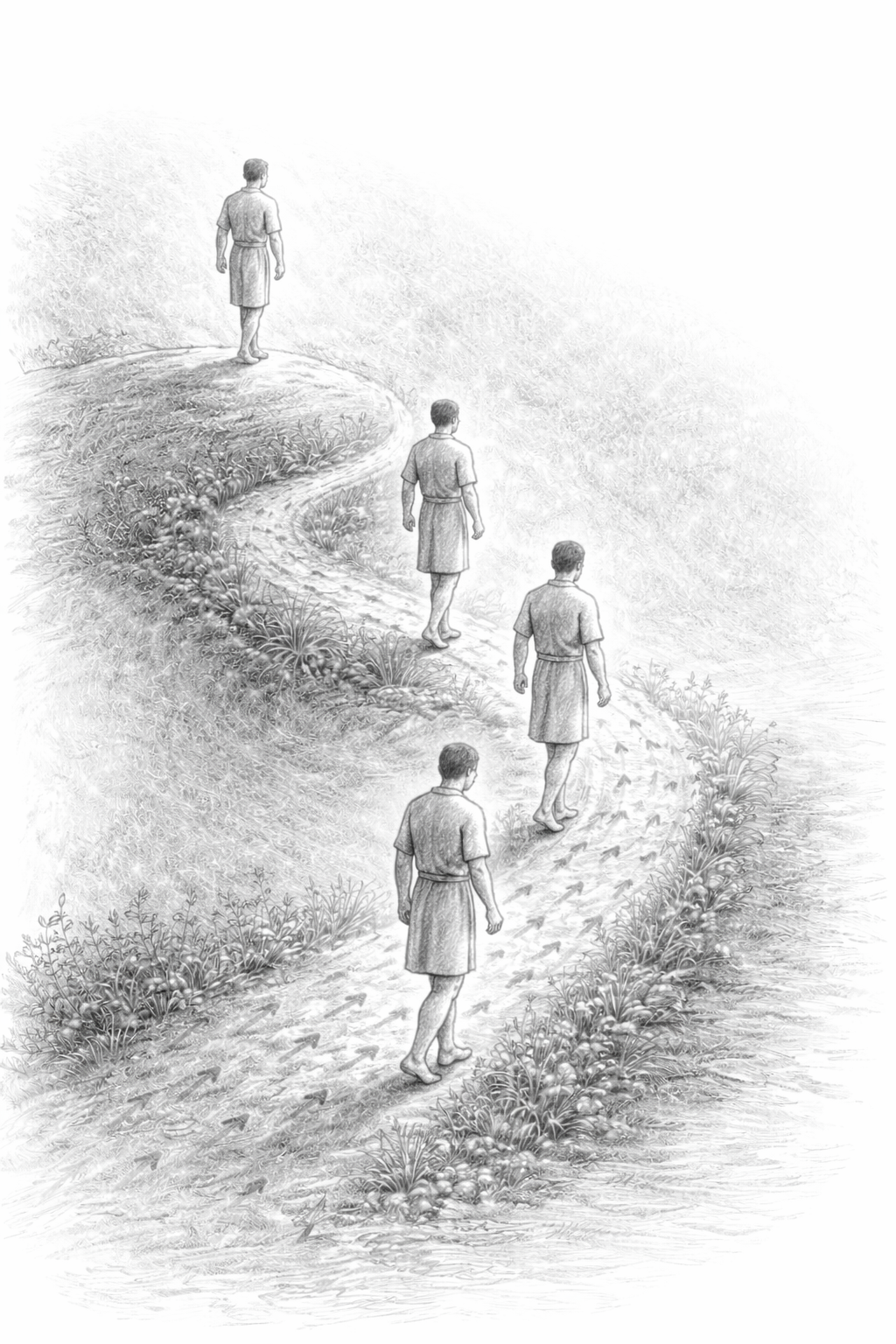
A single identity progressing through differing conditions of existence, preserved through change rather than replaced.
Is this all not but a common-sense intelligence of life and who the “me” is in me?
That question, simple and profound, rises from the soul. It’s not asked in doubt, but in recognition. It is the voice of eternal intelligence waking up to its own memory. The whisper of the divine within. The restored gospel does not demand blind faith—it invites remembered understanding. And that understanding is often less complicated than we imagine. It is common-sense eternalism. The logic of spirit. The truth that tastes good.
Joseph Smith taught that truth is knowledge of things as they are, as they were, and as they are to come (D&C 93:24). When truth resonates, it does so not because it is new, but because it is familiar. It is remembered. And in that remembering, the self begins to align. The me in me becomes visible.
Christ declared Himself to be “I Am that I Am” (Exodus 3:14). As Jehovah, He spoke to Moses from the burning bush not just as a messenger, but as the source of existence. That title—I Am—is not a name alone. It is a state of being. It is the voice of divine identity speaking with infinite self-awareness.
When we seek to know who we are, we echo that same divine identity. We ask, in our own language, the same eternal question: Who am I? And the answer begins not with data, but with awareness. With presence. With memory. “I am” becomes a sacred beginning.
In this sense, the path of discipleship is not merely about believing—it is about becoming. It is about recognizing the divine template already present within us, written into our intelligence before birth. Covenants, commandments, revelation, and redemption are all means of helping us remember the truth we already know: that we are children of God, created in the image of the Father, and destined—through Christ—to become like His Son.”
As our consciousness expands, it does not discover God so much as return to Him. Each act of love, each glimpse of truth, each moment of peace becomes another thread in the tapestry of our remembered identity. And in the end, when we see Him as He is, we shall know that He has always known us.
To say “I am” with humility and awareness is to begin to echo the voice of the Firstborn. The intelligence within you is not borrowed—it is eternal. It does not expire. It remembers. And one day, in the full light of truth, you will remember everything.
And it will feel like coming home.
Chapter 19: Exaltation and the Architecture of Divine Becoming
The gospel of Jesus Christ does not end with salvation—it reaches toward exaltation. To be saved is to be redeemed from sin and death; to be exalted is to inherit all that the Father has. Salvation is a rescue. Exaltation is a transformation.
Exaltation is not just a destination—it is a way of being. It is the final realization of the divine nature already seeded within us. As the Apostle Paul taught, “The Spirit itself beareth witness with our spirit, that we are the children of God: And if children, then heirs; heirs of God, and joint-heirs with Christ” (Romans 8:16–17).
In this framework, intelligence is not merely preserved—it is magnified. Our divine identity is not only remembered—it is exalted. Through Christ, we receive not only forgiveness, but the power to become like Him. As Joseph Smith declared, “God Himself was once as we are now, and is an exalted man.”
Exaltation implies inheritance: not of earthly possessions, but of eternal capacities. To create worlds. To extend mercy. To live in perfect union with truth, light, and love. These are not poetic dreams—they are doctrinal promises. And the priesthood—the power of God—is the key to this unfolding.
From a cosmic perspective, exaltation may be the ultimate coherence. In quantum physics, coherence refers to a state where particles or waves move in perfect harmony—a unified pattern that defies randomness and reflects purposeful connection. Similarly, exaltation is when all dimensions of the self—intelligence, memory, spirit, and body—are brought into unified resonance with divine law. No longer scattered by sin or divided by mortality, the soul becomes a singular, radiant being. This spiritual coherence may mirror the unseen order in quantum mechanics—where observation, entanglement, and resonance create meaningful outcomes from possibility.. In physics, coherence brings order to what was once scattered. In eternity, exaltation aligns all parts of the soul—body, spirit, memory, intelligence—into perfect resonance with God. The divine image is no longer a shadow. It is realized.
Exaltation is also deeply relational. It is not achieved alone, but in families, sealed and sanctified through covenants. “Neither is the man without the woman, neither the woman without the man, in the Lord” (1 Corinthians 11:11). Eternal relationships form the foundation of eternal glory.
To be exalted is not to escape the world, but to sanctify it. It is not to become something alien, but to fully become who we were always meant to be. It is the full unveiling of the divine “I Am” within each child of God.
And so, exaltation is not a reward—it is a return. A reunion. A realization. It is what happens when eternal intelligence, clothed in light and refined by love, steps into the presence of its Eternal Parent—and is welcomed home.
Chapter 20: Remembering Our Origin, Becoming Our Destiny
All journeys of becoming are, at their root, journeys of remembering. We are not wandering through randomness—we are navigating a return. We are not evolving into strangers—we are awakening into our eternal selves. What God placed in us was never forgotten by Him. Now, it is our turn to remember.
This remembrance is not merely intellectual—it is spiritual, cellular, atomic. It is the resonance of divine intelligence vibrating in the soul, stirred by covenant, awakened by light. We recall not only who we are, but *whose* we are.
The scriptures are filled with divine memory: “Before I formed thee in the belly I knew thee” (Jeremiah 1:5). “I have graven thee upon the palms of my hands” (Isaiah 49:16). “O remember, remember” echoes throughout the Book of Mormon, not as repetition, but as revelation.
This remembering realigns us. It restores us to the path. In a quantum sense, it collapses the wave of uncertainty and re-establishes the coordinates of divine potential. We become like particles drawn into coherence—once scattered, now ordered—once divided, now whole.
The atonement of Jesus Christ makes this remembering possible. His sacrifice is not only a cleansing—it is a clarifying. He reminds us of who we are, not with condemnation, but with invitation. He sees the real “I Am” inside each of us and calls it forth. Through Him, memory becomes identity, and identity becomes destiny.
To remember is to choose again. To act with clarity. To bind ourselves back to the truth with love. Each choice becomes not just a decision, but a return. Each covenant becomes not only a promise, but a pattern. And each revelation becomes not only new insight, but ancient recognition.
This is the mystery of divine becoming: we do not grow by leaving ourselves behind, but by returning to the truest version of ourselves—the one known to God from the beginning. As we remember, we align. As we align, we become.
In that final moment of remembrance, when all truth is unveiled, and all light is restored, we will see not only God—but the image of God within ourselves. And it will not be unfamiliar.
It will be home.
Chapter 21:
Time, Eternity, and the Living Present
can be measured by atoms, tracked by the movement of the sun, and
counted by clocks of astonishing precision. Modern science can divide a
second into billions of intervals, yet consciousness experiences time in
a profoundly different way. We do not live in atomic measurements. We
live in awareness.
A clock may record the passing of a minute, but consciousness may fill
that minute with a lifetime of meaning. A single glance at a photograph
may awaken decades of memories. A familiar fragrance may return us to
childhood. A song may revive forgotten joys and sorrows. The measurable
duration remains brief, yet the experience becomes immense.
This raises an important question: What is time to consciousness?
Albert Einstein demonstrated that time is not absolute. Time changes
with motion and gravity. The universe does not possess a single cosmic
clock ticking uniformly for all observers. Time stretches, contracts,
and varies according to the observer's frame of reference. What one
observer experiences as a short duration may appear much longer to
another.
Quantum physics adds another mystery. Through entanglement, particles
separated by vast distances appear connected in ways that challenge
ordinary notions of space and time. While entanglement does not allow
information to travel faster than light, it suggests that reality may be
more deeply unified than our everyday perceptions reveal.
These discoveries do not eliminate time, but they reveal that time may
not be the fundamental reality we once assumed it to be.
The deeper mystery is consciousness itself.
For most of mortality, we experience life sequentially. One thought
follows another. One memory rises and fades. One experience gives way to
the next. We move through reality in a narrow stream of attention.
Perhaps this sequential awareness is one of the defining limitations of
mortality.
The fingers move across a keyboard while the mind contemplates eternity.
The heart beats without conscious instruction. Memories remain present
beneath awareness, waiting to emerge when called upon. Much of what we
are exists beyond the small spotlight of conscious attention.
Yet even while consciousness focuses on a single thought, countless
other experiences remain within us.
Every joy.
Every sorrow.
Every triumph.
Every disappointment.
Every love.
Every fear.
Every discovery.
Each was once a present moment.
None have completely vanished.
They have become part of the architecture of intelligence itself.
The present is therefore not merely a point in time. It is a
gathering.
The present contains the accumulated meaning of countless previous
presents. Memories, relationships, lessons, and hopes converge into the
living awareness we call "now."
In this sense, consciousness may be continually constructing a larger
present from all the experiences it has ever known.
The philosopher and mystic traditions of many cultures have suggested
that true happiness is found in the present moment. Yet the present they
describe is not a razor-thin instant measured by clocks. It is a
fullness of awareness.
The scriptures suggest something similar.
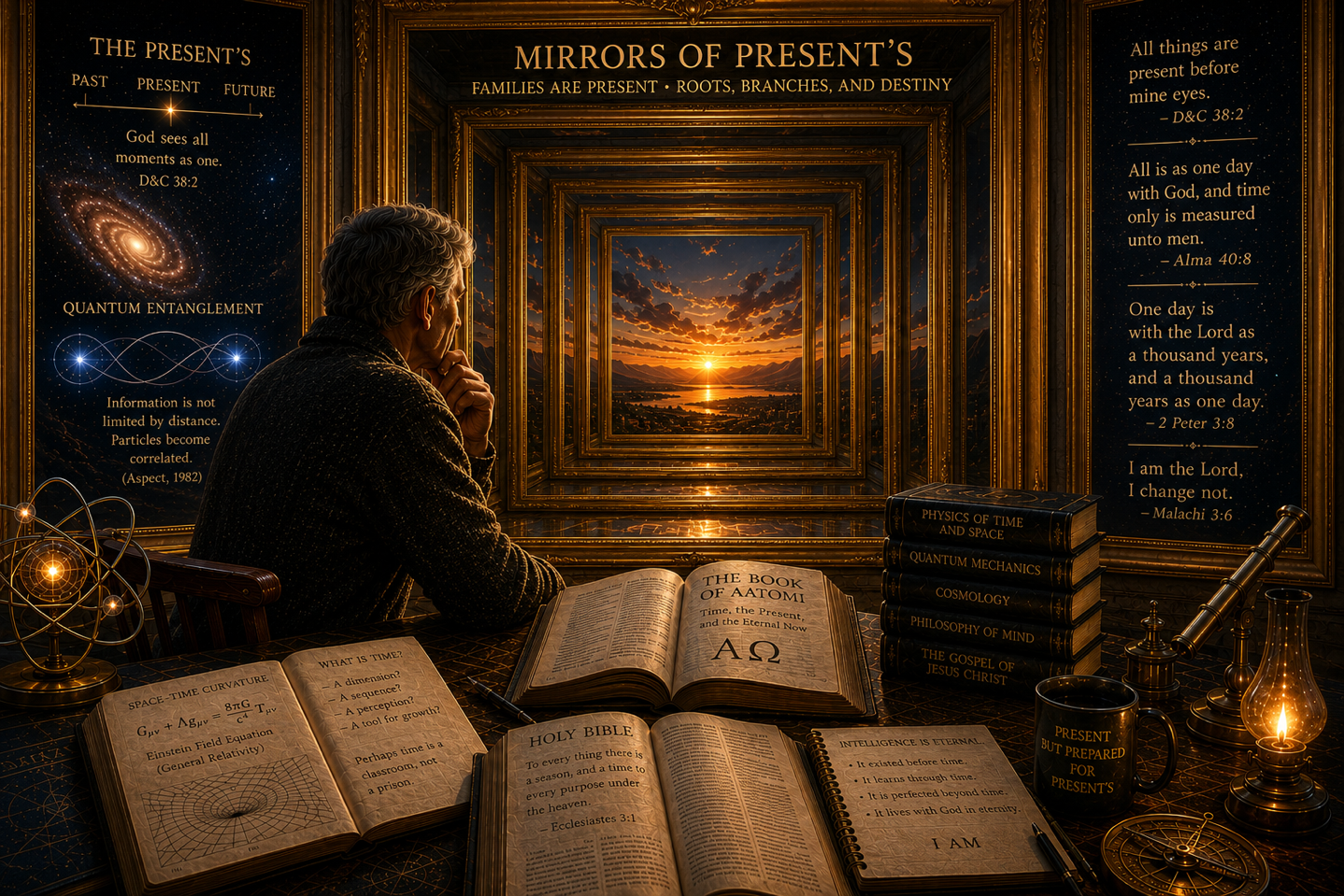
The Lord declares:
“I am the same which knoweth all things, for all things are present
before mine eyes.”
— Doctrine and Covenants 38:2
God does not merely remember the past or anticipate the future. All
things are present before Him.
Likewise, Alma taught:
“All is as one day with God, and time only is measured unto men.”
— Alma 40:8
Peter echoed this principle:
“One day is with the Lord as a thousand years, and a thousand years as
one day.”
— 2 Peter 3:8
These passages do not imply that time does not exist. Rather, they
suggest that divine consciousness relates to time differently than
mortal consciousness does.
Perhaps eternity is not endless duration.
Perhaps eternity is fullness.
Perhaps eternity is the capacity to perceive relationships, meanings,
and truths simultaneously that in mortality can only be apprehended one
at a time.
The mortal mind sees threads.
The eternal mind may see the tapestry.
This possibility sheds new light upon intelligence itself.
If intelligence is eternal, as revealed in Doctrine and Covenants 93,
then intelligence may not merely survive through time. It may
continually gather experience into greater awareness.
Every act of love becomes part of intelligence.
Every lesson learned becomes part of intelligence.
Every relationship becomes part of intelligence.
Nothing meaningful is wasted.
Nothing true is ultimately lost.
The present moment becomes the meeting place of all that has been
consciously lived.
My heart breathes with every thought as the clouds of existence almost
shield the sunlit blueness of the space above us.
The clouds are real. They drift across our awareness as events,
responsibilities, worries, successes, and disappointments. Yet beyond
them remains something constant.
The blue sky does not disappear when clouds pass before it.
Likewise, the deeper reality of intelligence may remain unchanged
beneath the passing conditions of mortality.
We often believe we are searching for more time.
Perhaps what we truly seek is greater awareness.
Perhaps we long not for more years, but for a fuller experience of the
present.
The deepest mystery may not be time itself.
The deepest mystery may be the consciousness that experiences
time.
If the journey of existence is the gathering of intelligence through
experience, then every moment contributes to an eternal becoming. Every
present joins every other present in the construction of a greater
awareness.
Thus eternity may not be found at the end of time.
Eternity may be discovered within the living present itself.
For in every true present, intelligence awakens to existence, and
existence awakens to itself.
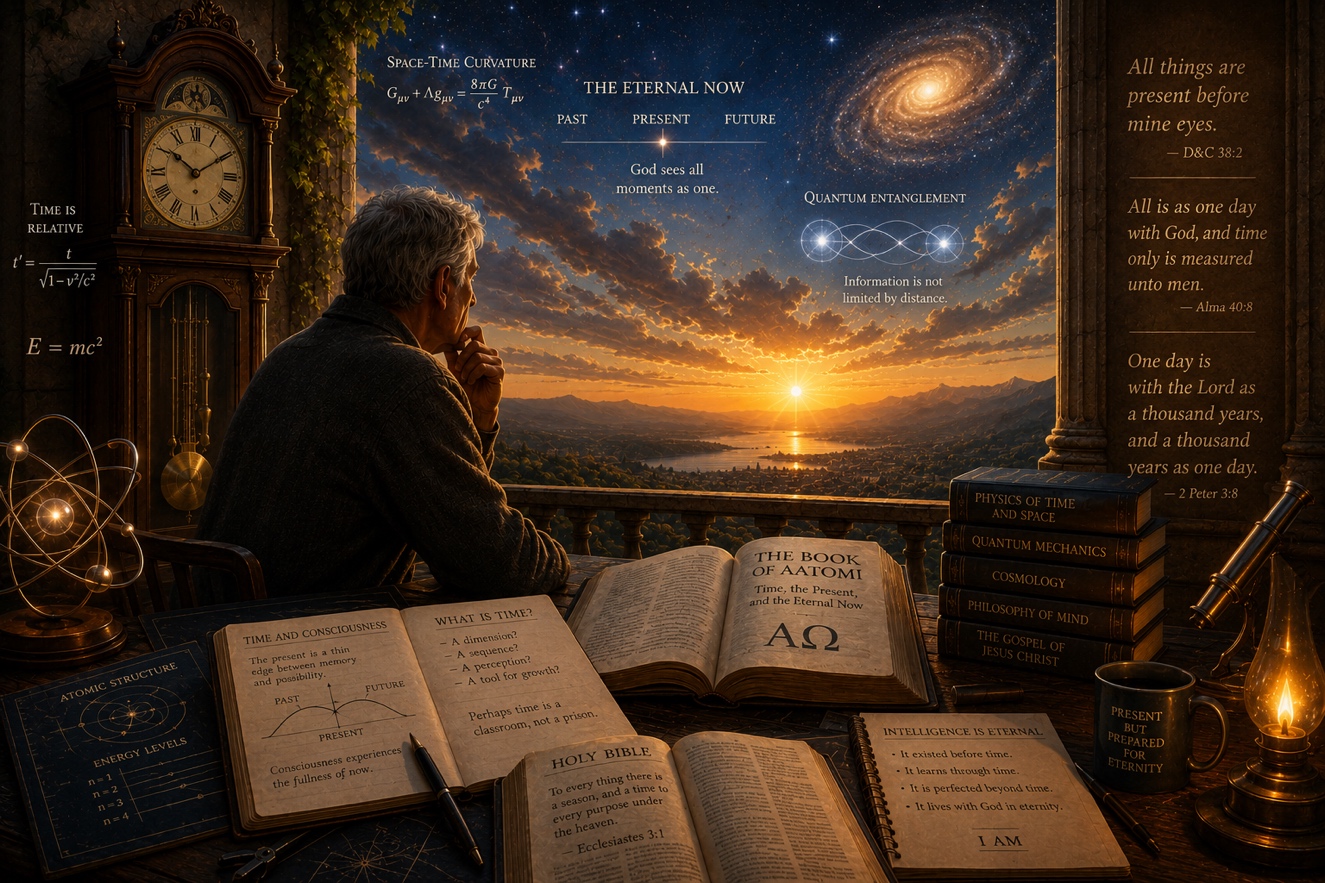
Chapter 22: The Mirrors
of the Present
There is a remarkable experience that occurs when two mirrors face one another.
A single reflection becomes many.
One image stretches into another, and another beyond that, until the eye can no longer distinguish where the reflections end. The mirrors seem to open a corridor extending beyond sight itself. Looking into them, one feels as though standing at the edge of infinity.
The image is simple.
The meaning is profound.
For many years I viewed these reflections as a symbol of eternity. Looking into one direction seemed to reveal an endless procession of generations that came before me. Looking into the other seemed to reveal generations yet to come. The mirrors suggested a continuity of existence that reached beyond the limits of mortal vision.
Yet as I reflected upon time, consciousness, and the living present, another possibility emerged.
Perhaps the mirrors reveal something even deeper.
Perhaps they reveal the nature of awareness itself.
Every reflection appears separate, yet all are connected.
Every image occupies a different position, yet all arise from a single source.
Every reflection contains the whole image, though from a different perspective.
In much the same way, every present moment of our lives appears separate.
Childhood.
Youth.
Adulthood.
Joy.
Sorrow.
Success.
Failure.
Discovery.
Love.
Loss.
Each seems isolated while we are living it.
Yet none truly stand alone.
Every present remains connected to every other present.
The child lives within the adult.
The memory lives within the experience.
The lesson lives within the understanding.
The joy lives within the gratitude.
The sorrow lives within the compassion.
Each present becomes part of every present that follows.
Perhaps this is why memory feels so mysterious.
A single fragrance can open decades.
A photograph can awaken forgotten emotions.
A song can return us instantly to another season of life.
The event itself has passed.
Yet somehow it remains present.
Not physically.
Consciously.
The mirrors suggest that what we call the past may not be entirely gone.
The future may not be entirely absent.
And the present may be far larger than we realize.
The Lord declared:
"I am the same which knoweth all things, for all things are present before mine eyes."
— Doctrine and Covenants 38:2
This statement has always stretched the imagination.
How can all things be present?
How can the beginning and the end coexist within a single awareness?
Mortality provides only hints.
We experience one thought after another.
One moment after another.
One memory after another.
Our attention appears to move through time like a traveler walking through a vast landscape.
But perhaps divine awareness does not travel.
Perhaps it beholds.
Perhaps God does not merely remember the past and foresee the future.
Perhaps He sees the whole.
The prophet Alma taught:
"All is as one day with God, and time only is measured unto men."
— Alma 40:8
Time, then, may be one of mortality's classrooms.
It teaches sequence.
It teaches growth.
It teaches patience.
It teaches cause and effect.
It allows intelligence to gather experience one lesson at a time.
But eternity may not be a longer timeline.
Eternity may be a greater awareness.
The mortal mind sees individual reflections.
The eternal mind may see the entire hall of mirrors.
This idea becomes even more fascinating when viewed through the lens of modern physics.
Einstein demonstrated that time is not fixed.
Duration changes according to motion and gravity.
What appears simultaneous to one observer may not appear simultaneous to another.
Time bends.
Time stretches.
Time depends upon perspective.
Quantum entanglement introduces another mystery.
Two particles separated by great distances can exhibit correlations that seem to transcend ordinary expectations of space.
Though science does not claim that consciousness or souls operate through quantum entanglement, the phenomenon reminds us that reality may be more deeply connected than everyday experience suggests.
The universe may be woven together in ways not immediately visible.
Relationships may matter more than locations.
Connections may matter more than distances.
Meaning may matter more than measurement.
When viewed this way, existence itself begins to resemble a vast network of reflections.
Every life touches another.
Every choice influences another.
Every act of kindness continues beyond its immediate moment.
Every sacrifice echoes through generations.
No thought is entirely isolated.
No life stands alone.
The mirrors reveal this beautifully.
Each reflection depends upon every reflection before it.
Remove one mirror and the corridor disappears.
Likewise, we are connected to those who came before us and to those who will follow after us.
Parents.
Grandparents.
Children.
Friends.
Teachers.
Strangers.
Countless lives contribute to the person we become.
And we, in turn, contribute to others.
The scriptures describe this connection repeatedly.
Malachi declared:
"And he shall turn the heart of the fathers to the children, and the heart of the children to their fathers."
— Malachi 4:6
This is more than genealogy.
It is relationship.
It is continuity.
It is the recognition that no soul exists independently.
We are woven together.
The mirrors also teach humility.
When we stand before them, we see ourselves repeated into apparent infinity.
Yet every reflection originates from a single person standing quietly before the glass.
The reflections are not the source.
The observer is.
Likewise, thoughts are not the source of consciousness.
Experiences are not the source of intelligence.
Memories are not the source of identity.
They are reflections.
The deeper mystery is the observer who experiences them.
Who is the "I" that witnesses thought?
Who is the awareness that observes memory?
Who is the intelligence that recognizes existence?
The Book of AAtomI has repeatedly returned to this question.
The answer may be simpler than expected.
The observer is the eternal intelligence spoken of in scripture.
The "I Am."
The awareness that has always been.
The awareness that learns through experience.
The awareness that gathers truth.
The awareness that becomes.
Every present contributes to that becoming.
Every experience becomes part of the observer.
Nothing meaningful is lost.
Nothing true disappears.
The mirrors remind us that reality may be far more interconnected than it appears.
The sunset reflected in one mirror appears again in another.
The light continues.
The beauty continues.
The image continues.
Perhaps existence is similar.
Perhaps every true act of love continues.
Perhaps every truth continues.
Perhaps every covenant continues.
Perhaps every relationship continues.
And perhaps every present joins every other present in the construction of an ever-expanding awareness.
The clouds of mortality often obscure this vision.
Responsibilities crowd our attention.
Sorrows darken our horizons.
Disappointments narrow our perspective.
Yet beyond the clouds remains the same sky.
Beyond the reflections remains the same observer.
Beyond the passing moments remains the same intelligence.
The mirrors stretch beyond sight.
The sunset stretches beyond the horizon.
The stars stretch beyond imagination.
And consciousness stretches beyond what we presently understand.
Perhaps eternity is not waiting somewhere ahead.
Perhaps eternity is already here, reflected within every present moment.
Perhaps every true present contains traces of every other present.
Perhaps every act of awareness is a glimpse into the greater reality that God sees completely.
For all things are present before His eyes.
And as intelligence gathers experience, memory, understanding, and love, it gradually learns to see a little more of what He sees.
The mirrors never truly end.
They simply fade beyond our ability to perceive them.
So it may be with existence itself.
The reflections continue.
The relationships continue.
The learning continues.
The becoming continues.
And somewhere beyond the final reflection stands the eternal Observer, who sees the whole corridor at once and invites every intelligence to discover that it has always belonged within the infinite hall of the living present.